The Top 6 Board Game Components to Add to Your Game

Posted on Leave a commentPosted in Uncategorized

Board games have been wildly successful over the last decade. In a world with abundant entertainment options, including video games, it might seem strange that a throwback hobby has done so well. Much of this success comes from the physical presence provided by board game components.

There is a lot of debate online about which components are the best. As with all questions of opinion, there is no objective answer. However, for a publisher or designer seeking to make their own games, there are trends that can be followed!

Looking for more resources to help you on your board game design journey?
Here you go: no email required!

Like this writing style?
Check out my latest blog on marketing here.

How I Gathered Data on Favorite Board Game Components

The best way to find out what board game components are the most popular is simple: ask a bunch of board gamers! Pangea Games did this through five giveaways. In these five giveaways, one of the entry conditions was to answer the question “what is your favorite board game component?”

The five games given away were:

Over 800 people answered our question over these five giveaways, giving us a great sample size. However, we want to make one caveat very clear. Every game we gave away, except for our own, was a mid-weight, mid-price game. If we gave away lighter games or big, expensive games like Twilight Imperium or Gloomhaven, we would likely see different results.

Nevertheless, I still think this data is useful and actionable whether you’re making a $10 game or a $200 game. You can use at least one of the recommended board game components below at any price point or game weight, if not multiple.

How I Cleaned Up the Data
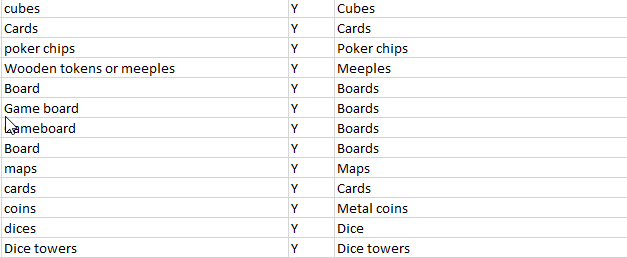
If you’ve ever worked with a large data set, you know that you can’t just pop it into Excel and make a pivot table. You have to clean up the data. If you’re smart about it, you can do this without accidentally taking away useful insights from the final analysis.

First things first, we removed duplicate answers by email. That is to say, even if one person entered all five giveaways, we only accept their first answer.

Second, we eliminated all answers that didn’t actually have anything to do with board game components. It’s a free text field, so we had to go line by line to remove garbage answers.

Third, we had to classify and sanitize data in order to use it. “Card”, “cards”, “playing cards”, “cards with great art”, and so on are all basically saying the same thing: cards. But each line had to be reviewed, again, one by one, in order to prepare data for final analysis.

Last, once all data was classified, we created a pivot table in Excel and did a simple count of all favorite components. Because we went through the whole data set and sanitized the data, different ways of saying the same thing didn’t screw up our final results.

Honorable Mentions
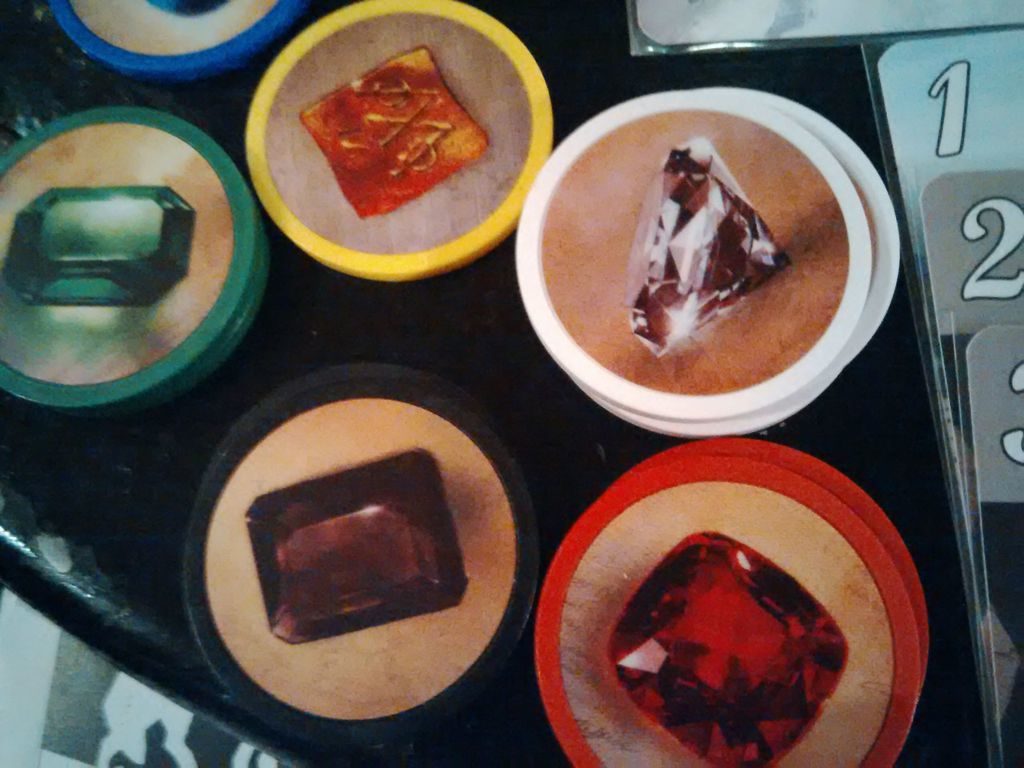
Gems in Splendor

Before getting into the top six components, I wanted to take a moment to acknowledge components that exceeded my expectations. These are not necessarily #7-10 on the list, but rather just surprising insights.

Poker chips, both the kind used for poker or the kind you’d find in Splendor, did exceptionally well relative to more commonly found components. That is likely because of their pleasant weightiness.

Inserts and trays to help board game pieces stay organized were surprisingly popular. This is perhaps because they look neat and reduce setup time.

Rule books, very surprisingly, have dedicated fans! There are people who read them for fun and who can really appreciate when they’re done well.

Maps were mentioned more than I expected. This may indicate that people like games with their own geography more than we realize. I wouldn’t read into this too much, though, since “maps” came up as answer a bit less than 1% of the time.

6. Metal Coins

Metal coins in Scythe.

With their satisfying weight, interesting textures, and satisfying clanging, metal coins came in at 7% in our data. If they were cheaper to create and ship, it is very likely that this would rank much higher on the list because they would be more common.

My takeaway is this: if you are creating a board game and you want the experience to feel really luxury or premium, then metal coins are a great way of accomplishing that through components.

5. Boards
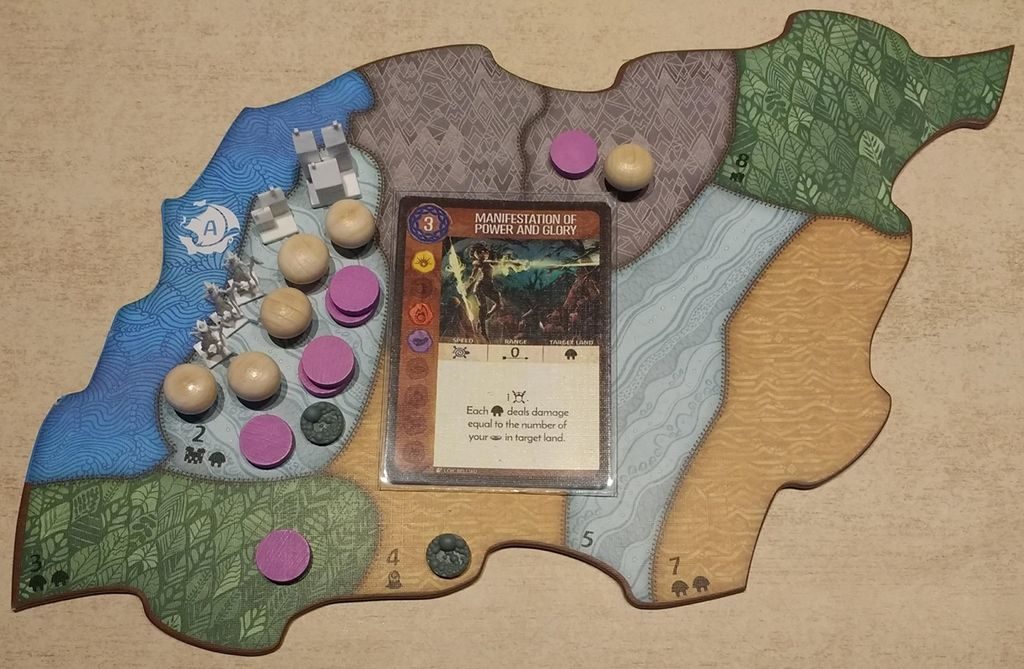
Board in Spirit Island

Perhaps unsurprisingly, one of the most popular board game components is…the boards themselves! Coming in at 10% in our data, those who gave longer answers explicitly stated the following:

  • Dual-layered player boards
  • Thematic boards
  • Beautiful board
  • Board/Map
  • Recessed player boards
  • A good looking board
  • Modular Boards

We noticed some common themes when going through this data. People are really attracted to board art, the physical feel of boards, and creative ways to use them. That means people aren’t so much attracted to regular, plain quad-fold boards. They want gorgeous boards that are used in unique ways and that have pleasant textures.

Looking for more resources to help you on your board game design journey?
Here you go: no email required!

Like this writing style?
Check out my latest blog on marketing here.

4. Cards

Cards in Dominion. Photo by Gary James (source, CC BY-SA 2.0).

Cards came up in our data 13% of the time, which is higher than boards! There’s little reason to wonder why, too. Cards can introduce both randomness and strategy into a game, so people automatically have positive assumptions about their role in a game.

Beyond that, cards have many opportunities to display gorgeous art. In fact, that’s what our data suggests people like most about cards – phenomenal art.

3. Dice
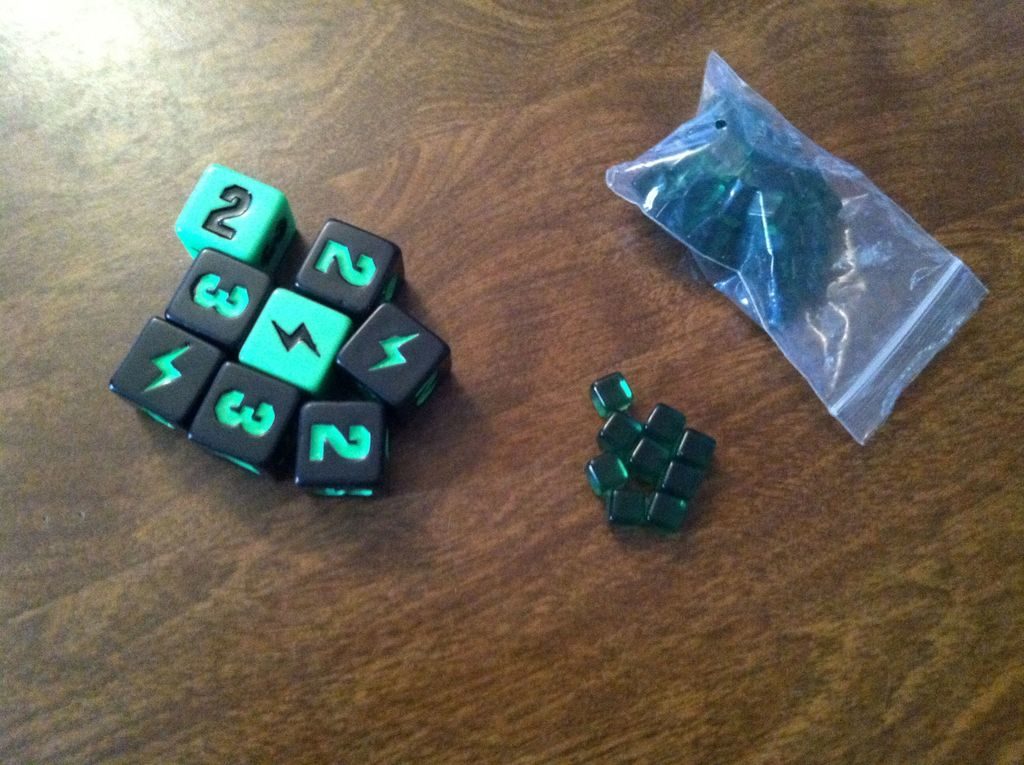
Dice in King of Tokyo

At 14%, dice are more popular than boards or cards. However, there is a caveat. We’re not just talking about regular six-sided white dice with black dots. No, people are attracted to custom dice.

We suspect this is because dice-based games put so much importance on these tiny components. You next moves hinge upon what the dice tell you, forcing you to look at them. When dice are customized in a thematic way, that is really memorable.

2. Minis
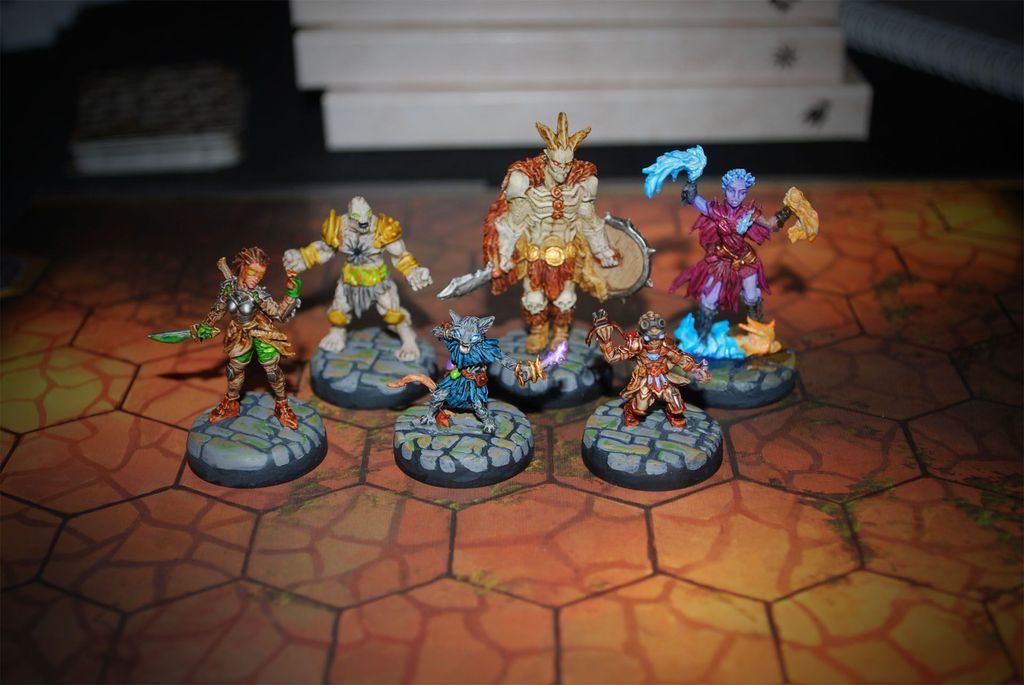
Miniatures in Gloomhaven

At 15%, miniatures, or simply minis, are incredibly popular. You find them often in your most expensive, physically and mentally heavy games. Miniatures look great on their own, but many hobbyists take time painting them.

Minis allow for raw creativity for both the game creator and the gamer themselves (through painting). Games with unique minis stand out head and shoulders over games that do not have that. It’s not hard to understand why, either. Just look at the picture above – that’s way better than a piece of cardboard wedged into a plastic stand!

1. Meeples
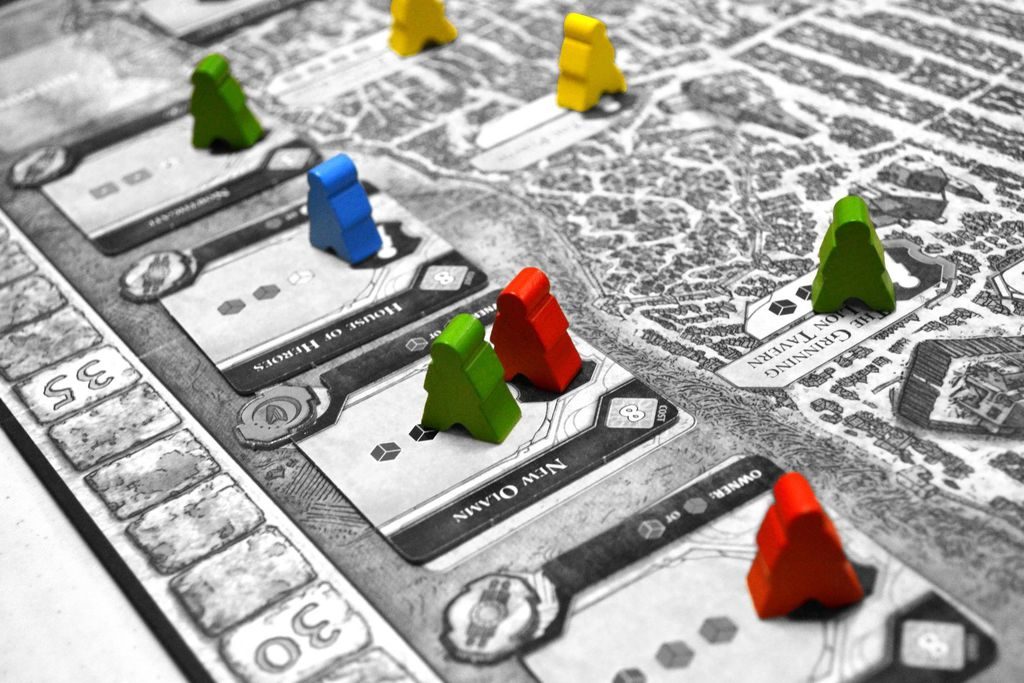
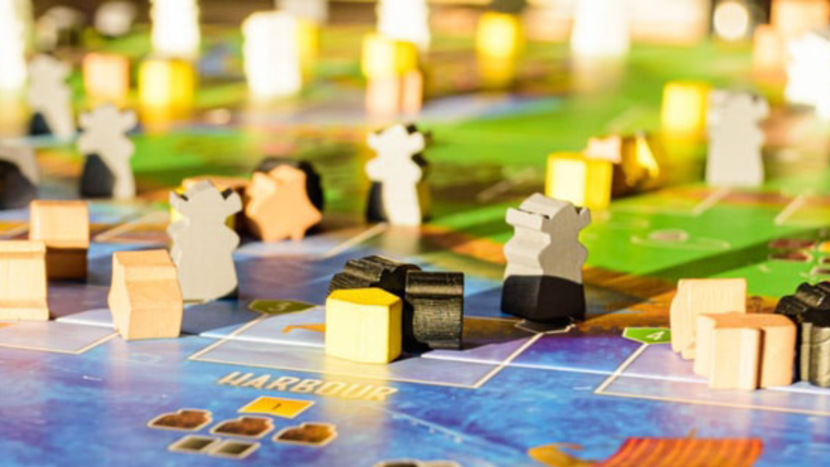
Meeples in Lords of Waterdeep. Photo by Chris Norwood (source, CC BY 3.0).

With a whopping 25% of the vote, meeples stand out head and shoulders over any other component. Particularly, custom, wooden meeples is unique shapes. Animal meeples, people meeples, abstract meeples…gamers love meeples!

While it may seem surprising that meeples beat minis, consider the following. Only a small fraction of games can afford to feature minis. Nearly any game can have meeples. The cost of custom meeples is pretty low, and they add a lot of character to otherwise very abstract games.

But perhaps more importantly than that, there is nothing more symbolic of board gaming than meeples. When you say “board game”, a lot of people will think of “meeples.”

Final Thoughts

Some board game components are exceptionally popular. Metal coins, boards, cards, custom dice, minis, and meeples all have their fans.

If you want to give your new game design a little pizzaz, consider adding any combination of the board game components listed above. You’ll be glad you did!

What’s your favorite board game component?


What confuses you most about board game development?

Posted on 21 CommentsPosted in Uncategorized

Board game development is incredibly complex. To create a board game from start to finish, think of everything you have to do:

  • Come up with a board game idea and design a game around it.
  • Create rules and mechanics that help you express your idea in the best way possible.
  • Play-test the game until it feels right.
  • Find artists.
  • Create digital print files of your game.
  • Figure out manufacturing and fulfillment.
  • Figure out marketing and promotion.

Needless to say, this is extraordinarily complicated. I’ve covered this topic from different angles for the last three years and I’m amazed even still by my blind spots.

With that in mind, this blog exists to serve you. I want to create information that is necessary and useful for every struggling board game creator who happens to stumble across this blog.

I have just one question for you today, and I’d like for you to answer in this post’s comments. I’ll use your questions as inspiration for posts coming in April, May, and beyond!

What confuses you most about board game development?

How a Failed Kickstarter Set Me Up For Success 2 Years Later

Posted on Leave a commentPosted in Uncategorized

Almost two years ago today, I launched a Kickstarter campaign for a board game called Highways & Byways. It was a deeply personal project for which I had high hopes. When it wound up being just another failed Kickstarter campaign, it hurt badly.

I learned a lot from that experience. From it, I went on to write Why the Highways & Byways Kickstarter Campaign Crashed & Burned, which remains one of the most popular posts on this blog, even two years later. To save you a click: it was a product made for no specific audience in mind at a price point that was unresolvably high. Needless to say, I learned a lot in the first few weeks after that campaign.

But it was still raw then. So unbelievably, painfully, humiliatingly raw.

Yet two years later, when I look back, I see how its failure ended up improving my life and my business in a number of ways. With the benefit of hindsight, I will now share my experiences with you.

Looking for more resources to help you on your board game design journey?
Here you go: no email required!

Like this writing style?
Check out my latest blog on marketing here.

Failure, Success, Luck, Skill, Ruin, and Reward…

Further along in the post, I will talk about specific ways that the Highways & Byways Kickstarter campaign failure made my life better. But first I want to talk about a few things I’ve learned about failure and why I think my experiences clash with common narratives that I’ve read online.

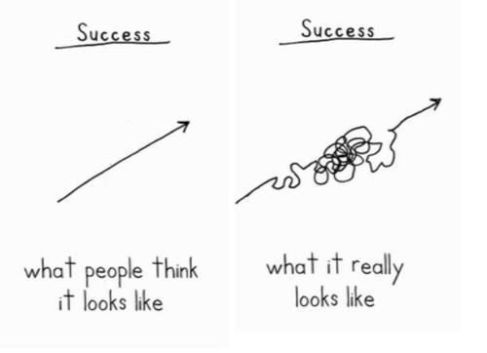
The Road to Success is Not Linear

I don’t think people write about failure enough. When they do, they write about how to avoid it or they write superficially about failure in the empty headed Silicon Valley way. Fail faster. Fail harder. More failure is good! Fail, fail, fail.

Give me a break.

Refusing to talk about failure is bad, but so is over-correcting and deifying it. Failure isn’t intrinsically good. It’s more like a powerful flame that does away with illusions and excuses. It’s a purifying, important force in business, but – yes – it will burn you. And it will hurt.

The oh-so-chic self help bloggers will tell you that failure is necessary to success. They won’t tell you how. Understanding how failure will help you makes all the difference here, and I’ll get to that shortly.

Even still, the undeniable fact that the road to success is nonlinear, complicated, and often unpleasant. If you’re a creator or a business owner, remind yourself of this every day. Remind yourself even when you know it intellectually to be true, because emotionally you may still feel that it is not. Tell yourself every day that the path to success is nonlinear so your heart will not ache from the heavy burden of unrealistic expectations.

Failure Probably Won’t Ruin You

Don’t risk anything you can’t afford to lose, obviously. Life isn’t the Greatest Showman. You need to mitigate risk as much as you can. Stories of people who came back from bankruptcy typically suffer from one of three flaws:

  1. Family wealth propping up the protagonist.
  2. Hollywood outright fabricated the story.
  3. Sheer luck and survivorship bias.

That said, if you’re a member of the unflashy 99% like your humble narrator, that doesn’t mean you can’t play with stakes. You need to invest in your games, your business, and yourself. You will occasionally lose. But as long as you’re not taking out massive debts, a failure probably won’t destroy you.

Most people, when they fear that failure will ruin them are worried about some kind of profound damage to their reputation. But honestly, basically every board game designer, corporation, musician, artist, and even employee has flopped at some point.

Not everything is going to be your best work, and you can’t even reliably predict what people will latch onto. That means the only way you, as a creative force, can survive is to keep creating. If you keep creating for long enough, you will, by sheer probability, make something bad or too weird for a mainstream audience.

Guess what: as long as you still have cash in the bank, you will have a chance to make something new.

Most of Life is Luck, But You Still Have Agency

Don’t get me wrong. When I say failure likely won’t ruin you, I’m still fully aware that different people have different levels of, for lack of a more precise term, privilege. Where you’re born, who you’re born to, and your formative years determine a lot of your life. After that, social mobility is possible, but difficult and this is true no matter where you go.

Random things happen. Family members get sick or injured. Bills come out of the blue. Projects fall apart. Roofs spring leaks and landlords don’t keep their promises.

Even through all this, you broadly have one choice to make: try or not try. Trying doesn’t guarantee success and not trying doesn’t guarantee failure. But if you at least try, your odds of living a happier, more fulfilled life improve.

Looking for more resources to help you on your board game design journey?
Here you go: no email required!

Like this writing style?
Check out my latest blog on marketing here.

How a Failed Kickstarter Made My Life Better

Everything I’ve said so far has been about failure in general. That is: clarifying misconceptions, talking philosophy, and so on.

But now I want to talk about specific ways the Highways & Byways Kickstarter campaign wound up making my life better. Some of these ways have been predictable and some of them have not. But all of them suggest that the most important thing you can do is try to chase your dreams, even if you think they’re silly.

How a Failed Kickstarter Set Me Up for Marriage

Yeah, I bet you didn’t expect me to lead with that!

I’m engaged to be married in October to a wonderful woman named Maria. We met on Match.com, like nerds, and one of the first things that we bonded over was board games. I was working on Highways & Byways at the time when we first started messaging. That gave us plenty to talk about, and led to a date, then two, then three. Many months passed, diamonds were purchased, and now we’ve just sent out Save the Dates.

I’m not saying that chasing your dreams is going to help you find your soulmate. That was pure luck for me. But chasing your dreams, even if they seem silly, will give you something to talk about.

People are drawn to passion. They will be much more likely to listen to you and they will be more likely to want to be your friend. The act of publicly working on a passion project will grow your network and that can have profound, hard-to-measure, hard-to-predict positive impacts on your life in the long run.

By the time the campaign failed, we were already in a committed relationship, and after a few weeks of conspicuous self-pity masculine brooding, I moved on to the next thing, but this time, I wasn’t alone.

How a Failed Kickstarter Increased This Blog’s Reach

Shortly after I Kickstarted War Co., I launched this blog. After one campaign’s success, I was already writing Start to Finish, a long guide on how to create board games for the first time. It was detailed and ambitious, if a bit premature since I had only one game under my belt at the time.

This blog didn’t start seeing meaningful traffic until 2018, but it really took off after the Highways & Byways campaign failed.

Wait, what?

If you look at the chart above, you can see a quick succession of traffic spikes in late March to early April. Those spikes in traffic can be attributed to:

The ultimate result? The Crashed & Burned post, which talked about all the ways the Kickstarter campaign went wrong, was my most popular post yet. I got a ton of email signups, got a bunch of social media attention, and ever since the creation of that post, the amount of pageviews went up permanently and never dropped.

In short, the failed Kickstarter made this blog a lot more popular. Having regular readers makes it far easier to succeed in future endeavors.

How Highways & Byways Made Tasty Humans

Speaking of future endeavors, you know how I described failure as a “clarifying experience” a moment ago? Here’s what I mean specifically in the case of this failed Kickstarter.

  • I realized that every game needs to be made for a specific audience.
  • Because the Highways & Byways price was way too high, we created Tasty Humans in a way that made it as cheap to print as possible.
  • I started working in a team because working alone was causing me to split my attention too many ways.

Without the Highways & Byways experience, I would not have learned about the vital, unavoidable importance of product-market fit. That is, creating products that are tailor-made for a specific audience. I wouldn’t have learned cost-cutting tricks needed to make games cheaper. I would have continued working alone instead of delegating responsibily.

Pangea Games would have continued cranking out sub-optimal work and making small profits. Tasty Humans would have succeeded on theme, but probably would have made a lot less money and generally been a much worse game. That is, if it existed at all.

How a Failed Kickstarter Taught Me What I Needed to Make a Profit

Speaking of profits, we did not make one in 2018. Oh, no sir. We posted a loss of a few grand in 2018, followed by a much larger profit in 2019. So how did this happen?

First, because Tasty Humans was a much better project and game, it was actually profitable. Without Highways & Byways, this would not have happened.

Second, I realized that board games alone were not the ideal way to run a business. In addition to making board games, I also run Pangea Marketing Agency, which is quite profitable. This diversified the sources of this business’s income, making it much more viable in the long run.

Much of our success in 2019 came from landing Fulfillrite as a client. With the privilege of their business, we were able to land some smaller clients as well. And how did they find us? Through the blog, which saw a massive traffic spike that began with the failure of the Highways & Byways Kickstarter campaign.

How a Failed Kickstarter Made Me Care Less About Unimportant Garbage

One of the most underrated blessings of failure, by far, is that you finally have permission to stop doing stuff that doesn’t work. Yes, you can do this at any time, but let’s be real: you’re probably doing a lot of work that you don’t actually see the value of but you’re afraid to stop for fear that something bad will happen.

If that sounds like you, then something bad happening can be a real relief. Tweet five times a day, go to a convention every month, post on all the Facebook groups. Blah, blah, blah.

When you really get down to it, marketing comes down to two basic tasks. One: make something worth selling. Two: tell people you’re selling it. You have a lot of leeway in how specifically you choose to do that. That means if you hate Twitter, then you don’t have to use it.

After the Highways & Byways campaign failure, I shuttered at least eight social media accounts and stopped writing twice a week. I started focusing on doing less, but better. I got off the constant networking / content creation treadmill and dedicated myself to what matters. Without failure, I’d probably still be performing the same nervous rituals, dancing in faint hopes that I could make it rain.

Final Thoughts

Failure is kind of like a hangover. It feels really bad, but it gives you a very compelling reason to be better tomorrow. Powerful, painful emotional moments give us the psychological fuel and practical experience to create something better.

Chase your dreams. You might succeed, and even if you don’t, the clouds of your failures could have incredible silver linings that you wouldn’t otherwise see. It’s worth a shot 🙂