Sweat and Serendipity – How I Got Into the Board Game Business

Posted on 9 CommentsPosted in Motivation

I didn’t mean to be a board game developer, but everything I did to get here was on purpose. As a child, I was intensely interested in board games and video games. I’ve got multiple dresser drawers and an almost immovably heavy chest full of creative projects from back then. I’m talking about fake Nintendo 64 manuals scribbled in colored pencils on printer paper for games that never existed and board games drawn in Sharpie on posterboard glued to the rigid cardboard of cereal boxes.
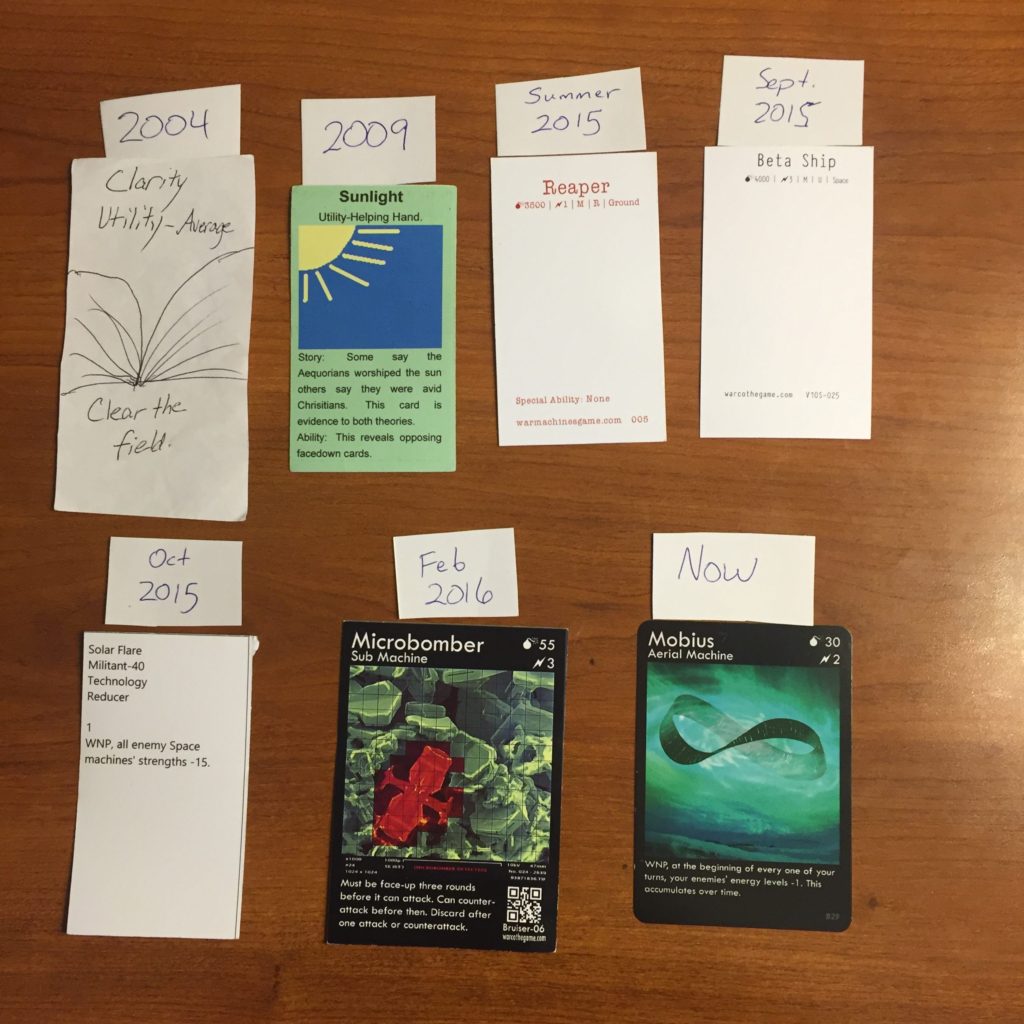
Childhood Version of War Co

Looking for more resources to help you on your board game design journey?
Here you go: no email required!

Like this writing style?
Check out my latest blog on marketing here.

When I was 11, I made a card game based on my understanding of Yu-Gi-Oh! from the cartoon on TV. It became popular within my friend group for a few months, maybe a year or two. In time, I completely forgot about this game, until I revised it at age 16 and then age 20. At age 22, I picked it up again, got really serious about it, and recreated it from scratch. That’s how War Co. was born.

I wish I could say War Co. was made entirely out of my altruistic desire to create something beautiful and share it with the world. The truth is that my motivations weren’t that pure. I had graduated with my MBA a few months prior to starting serious development on the game. I had been interested in entrepreneurship and needed an idea to push. I figured “what the hell?” and gave it a shot. I moved like a man possessed and spend hours and hours creating, not necessarily for its own sake, but frankly because I was freaked out by how disappointing my first job out of college was. That’s where the dystopian hyper-corporate theme came from. Even that was an exaggeration because there’s not much wrong with the company I was working for anyway (though I did move into a better job in IT for a hospital).

I created both for its own sake and out of a half-baked fantasy that it would make me independently wealthy.

I’ve established that I loved making games as a child, so you might imagine that I had deep ties in the board game community. You might imagine that I had hundreds, or at least dozens of board games. I didn’t. Sure, as a child, I was surrounded by the big-box, available-in-Walmart games of the nineties and early-00s. Up until very recently, I wasn’t into the Catan/Carcassonne/Pandemic culture that we all know and love. I was a designer before I was a gamer.

Shelfie Board Game Collection
I wasn’t in the “shelfie” crowd.

How does that even work? How do you even design without gaming? Well, poorly…at least at first. I designed early versions of War Co., starting going to board game meet-ups in homes and game stores, and playing games by the dozens. I began to understand why games are the way they are. I began to understand design choices. I began to understand industry workings. I began to understand social dynamics. But I had none of that context until 2016. I learned really rapidly and I’m still learning really rapidly. Don’t let my Kickstarter successthe positive critical reception of War Co., and the fact that I’ve delivered on time give you the wrong impression. I’m committed to learning and growing because I’m still pretty new at this.

Of course, that Battle of the War Co. Kickstarter was hard-won. In February 2016, I fell on my face hard. I launched a very unsuccessful early campaign for War Co. that wasn’t close to funding. It hurt. Bad. I’d never experienced failure on that scale and never wanted to again. That failure stripped me of get-rich-quick fantasies and showed me very clearly that I had a lot of work to do to make War Co. something people would enjoy.

I made a list of everything I did wrong. That list had about 40 items on it. I fixed almost every single one and relaunched six months later, successfully raising $12,510 on my second try.
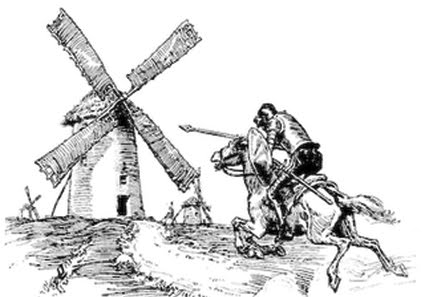
Don Quixote Going for a Windmill
I’ve titled at a couple of windmills in my early experiences as a game dev.

Some people say the board game industry is all about “boots on the ground” – by which they mean going to conventions and local gaming stores. True to the ass-backwards Don Quixote approach I took to creating War Co., I didn’t really do that. My day job precluded most conventions at the time, but that still doesn’t explain my avoidance of bringing War Co. to gaming stores. In truth, that had much more to do with my unrealistic expectations and plain old naivete. I learned. In the development of my second game, I won’t be so quick to shy away from these valuable in-person events. Thankfully, I had a very strong social media presence on Twitter and Instagram as well as a strong presence in some Twitch communities. That was enough to at least partially make up for my weaknesses.

After War Co. was sent off to the printer in October, I was bored. I started this blog. I wasn’t sure about it and I wasn’t sure about my future as a game developer. Still, I kept putting out two articles per week, even when no one was looking. It was only in late February that this blog actually started to get attention after one of my fulfillment posts.

War Co. finally arrived in the third week of December. It came in enough boxes to fill up the trunks of my car and my brother’s car, with a few still stacked in my backseat. It was when I fulfilled the game myself to residents of the USA that everything finally clicked for me. I decided to stay in the game industry. I decided to make another game. I committed.

Now I’m making a new game about winding journeys over long distances with lots of twists and turns. I think there’s a bit of poetry to that. There’s no one path to becoming a designer. Make something beautiful for its own sake, iterate until you get it right, and learn from others.



6 Underrated Skills That Make You a Better Game Developer

Posted on 2 CommentsPosted in Dev Diary

For the first time since the beginning of the year, I took real time off. Completely away from my day job and my business, I found myself reflecting on the winding journey I’ve taken over the last couple of years to get here. I drove all the way from Chattanooga to the Outer Banks and back and the 20+ hours of driving really set my head straight again. I realized that in my push to create Highways & Byways, I’ve neglected six very powerful background skills that make game developers great. Game development is about more than just game development, folks.

Looking for more resources to help you on your board game design journey?
Here you go: no email required!

Like this writing style?
Check out my latest blog on marketing here.

I’m going to cover each of these six skills while providing examples that will update you on my progress on Highways & Byways this week. The Dev Diary is about more than simple updates – it’s about sharing what I’ve learned through my personal experiences with you.

Skill 1: Strong Goal Setting

If you ask any self-improvement guru or successful businessperson, they’ll all preach the importance of setting clear goals. After all, if you’re not 100% sure about what you want to accomplish, how will you know when you’ve done it? How will you know if you’ve done a good job?

Game of Darts
Just like in a game of darts, if you don’t have a clear target, you won’t win.

Be extremely clear about your goals. Write them down. Speak about them often. Your broad goals should determine everything else you do. The bulk of your time should be spent working toward your most important goals.

Here’s the goals I’ve set for my company, Pangea Games. I split them into “Guiding Lights” and “Goals.” The Guiding Lights will not change. The Goals might, depending on how well they serve the Guiding Lights.

Guiding Lights:

  1. Make great games.
  2. Help game developers unlock their creativity.

Goals:

  1. Develop Highways & Byways. (Goal for Guiding Light 1)
  2. Create and curate great blog posts. (Goal for Guiding Light 2)
  3. Create and curate great social media content. (Goal for Guiding Light 2)
  4. Create an inner circle of devs. (Goal for Guiding Light 2)

Skill 2: Time Management

Somewhere along the line, when I was developing War Co., I stopped using my calendar as effectively as I did in college. I was making to-do lists for things I needed to accomplish in the day, but I wasn’t estimating their time. I also wasn’t sorting them by importance. That means I often spent my days accomplishing the wrong things and running out of time! Yikes!

With my aching head soothed by the break I gave myself going to the Outer Banks, I was able to look at my Google Calendar and cringe. I spent a few minutes resetting my calendar around the goals I’ve set. Now I’ve got it to where game development gets first priority and the most time, blog writing gets second priority and the second-most time, and everything else gets done when I have time.

Calendar Before
My calendar before I fixed it.
Calendar After
My calendar after I fixed it.

If you struggle with time management in your game development projects, here’s what I suggest:

  1. Get a Google Calendar. Use it to track your time for a week or two, even if you don’t use it for scheduling. It’s an eye-opening experience if you’ve never done anything like it.
  2. Update your calendar to block off specific time periods for your most important tasks. Refer to your goals.
  3. Schedule your highest priority tasks to the available times of day you feel most energetic.
  4. If you run out of time to do low priority tasks, you’ve got three broad options: get someone else to do them, do them better, or just straight-up quit doing them.

Skill 3: Process Improvement

When you find yourself doing an ongoing process, take a few minutes every week or two to ask yourself whether you’re doing it right. With an ongoing process, you want to ask yourself two questions:

  1. Does this serve my goals? If the answer is no, chuck it. If the answer is yes, read on.
  2. Am I doing it effectively and efficiently? Is the process affecting your progress toward goals in a desirable way that’s worth the time you’re spending on it? If no, look for ways to improve it and if you can’t, scrap your process. If yes, read on.

A lot of you know me through social media, which I use a lot. Truth is, some of my techniques for running social media haven’t been super efficient. I spent about an hour this week looking at Excel sheets of my tweets and Instagram posts. I figured out what people like to see and I’m going to give them more of it.

Skill 4: Introspection

Game development is hard. It’s really, really hard. You have to make sure you want to do it if you plan on putting the hours, months, and years into game development it takes to master it. Ask yourself these two questions and don’t stop until you get an answer:

  1. Why do I want to make games?
  2. Do I really like making games? Do I like making games enough to push through the immense struggles of game development?

If you get a vague answer for question 1 or a negative answer for 2, you should quit. I’m serious. If you’re not into game development, you should quit. It’s a hard job and it’ll make you miserable if you don’t have the passion.

I’ve found that after years of putting up with crap (from others, but mostly from myself) during the development of War Co., I really do love what I do.

If game development is something you really like, there’s another question you should answer as well. What makes a great game? I’ve written a whole page about it. It’s for my eyes only, but there’s a thirst for it, I’m happy to share it with all of you as well!

Skill 5: Continual Improvement

Just about the biggest indicator of long-term success in game developers – and entrepreneurs at large – is the ability to learn from your mistakes. If you’ve been creating for more than few months, you’ve probably done some things wrong. Write down what you’ve done wrong and be brutally honestHonest assessment of your weaknesses is critical to growth because it can lead you to ways to improve your work. Assess your failures, come up with ways to fix them, and then continually try those ways out. Keep what works, drop what doesn’t.

What does this look like for me? Well, I spent half an hour writing an autopsy for War Co. Yes. I declared my beloved baby project dead* and I wrote down everything I did wrong. I ended up with a list of 35 ways to improve. Some of them hurt my heart when I look at them. But hey, I have a list of 35 mistakes I won’t repeat in Highways & Byways.

* You can still buy it, though 😉

Skill 6: Ongoing Training

The first five skills are ones you can do alone. This sixth one isn’t. Seek out books, blogs, and podcasts about board games and board game design. Take classes if you can. Commit to ongoing training. You’ll never be perfect – the True North is far, far from us mere mortals. Drop the ego and learn. It’ll make you strong.

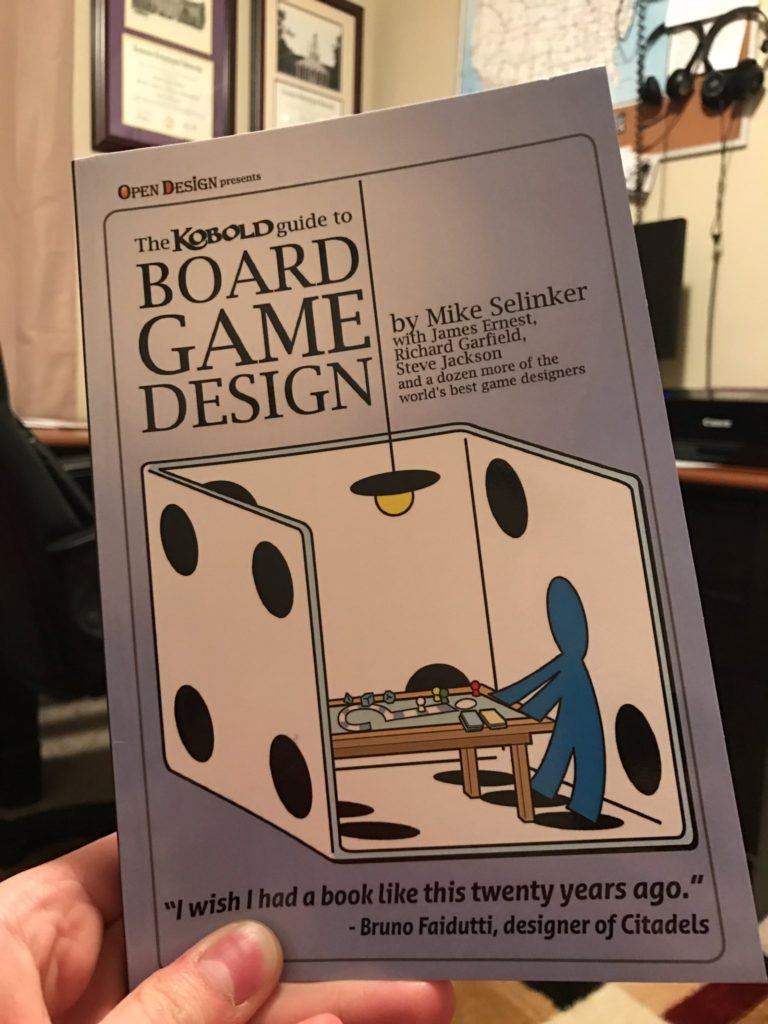
Kobold Book of Board Game Design

This week, I read the Kobold Guide to Board Game Design. It’s a good read, and $20 very well spent. I also set up a Feedly feed for board game development blogs. That way I can keep my development sauce spicy.


More Highways & Byways Game Progress

Over the last week, I spent three days vacationing and three days honing the skills I’ve listed above. I’ve spent the seventh day play testing the second draft of Highways & Byways with my brother. My current focus is working on the experimental “traffic” mechanic, which keeps the game from feeling like multiplayer solitaire. I haven’t got enough data yet to tell whether this is a good idea or bad idea yet. I’ll keep you posted.


Key Takeaways for Game Devs

  • A lot of the skills you need to succeed as a game dev are general life skills, not technical skills.
  • Set clear goals. The way you spend your time and every action you perform should link back to your goals.
  • Manage your time well. There’s only so many hours in a day, and Google Calendar and help you squeeze every minute of them.
  • Evaluate your processes from time to time. Make sure they’re efficient in serving your goals.
  • Ask yourself the hard questions. Do you really want to be a game developer? Do you want it bad enough to push through the hard stuff? What does a good game look like to you?
  • If you’re in it for the long haul, analyze your failures. Look for ways to improve.
  • Keep your skills sharp by playing games and reading books and blogs.


Colt Express: Making Players into Planners

Posted on 2 CommentsPosted in Game Breakdown

Becoming a game developer/blogger was my second career choice. In my heart of hearts, I’m a cowboy and a bandit. Despite an upbringing in the American Southeast, I shoot like that one guy in Blazing Saddles. It was therefore my great pleasure and fortune to be able to play out my Sergio Leone film fantasies at the game table of my friendly local gaming store.

Looking for more resources to help you on your board game design journey?
Here you go: no email required!

Like this writing style?
Check out my latest blog on marketing here.

Colt Express is a popular game with a resume loaded with accolades like Spiel des Jahres Winner and several Golden Geek nominations. It’s no surprise when you play it on the table! It’s innovative both in its gameplay and in its presentation, which involves a 3D train and clever use of verticality which you don’t often see in the Flatland of board gaming.

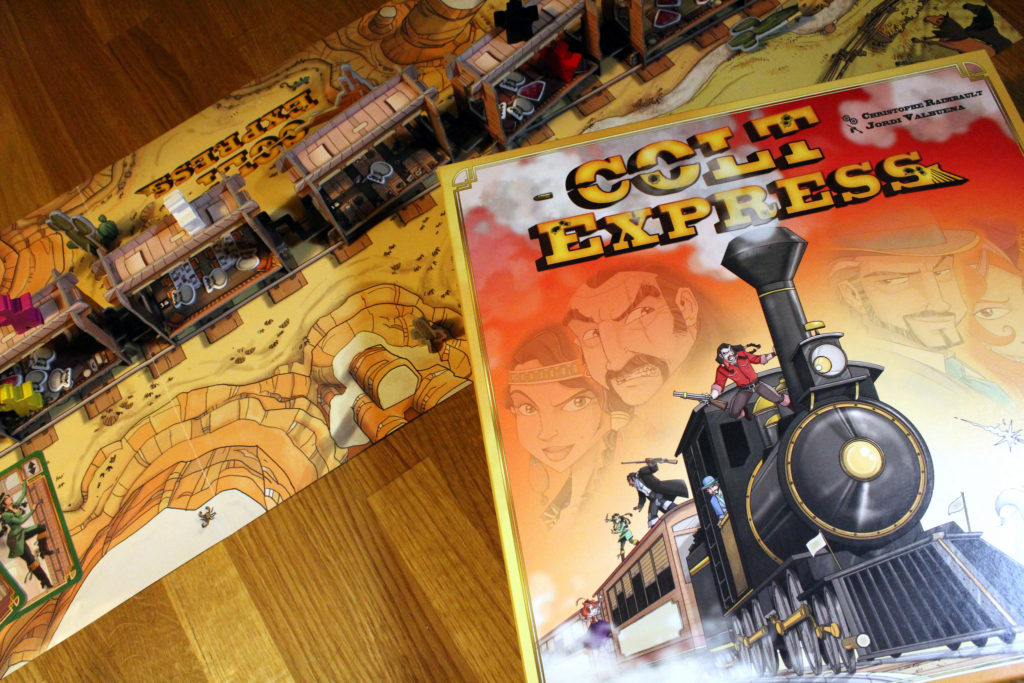
Colt Express Box
Photo taken by MeoplesMagazine and posted to Flickr under the CC BY SA 2.0 License (Source).

It’s a pretty lightweight game, so it’s easy to explain the rules. Between 2 and 6 people can play and it takes roughly half an hour. You play as a bandit with the singular focus of doing what bandits do best: chasing sweet, sweet money. This money comes in the form of suspicious bags of cash, giant rubies, and Pulp Fiction suitcases. This cash is represented by components which are scattered across the train.

So far, so simple. This is where things get interesting. You and your opponents must choose your moves in advance for an entire round. You and your opponents all have ten cards for six possible moves: grab money, shoot someone, punch someone, move side to side, move vertically – from the cabin to the roof or vice versa, or call the marshal. You draw six of these ten cards. Then you and your opponents take turns playing cards until you’ve played four from your hand for the round. At the end of the round, you get your cards back, shuffle them up, and draw another six cards. After a few rounds, the game is over and you count your cash.

You determine what moves you’re going to make in advance of the round. Because of this dynamic, Colt Express is a programmable movement game. For the purpose of this breakdown’s coherence, I won’t go into details of the shooting and marshal mechanics, nor will I cover the end-game shooting bonus. I’m going to focus on the programmable movement, because this mechanic alone has a lot of subtle implications which I will proceed to break down.

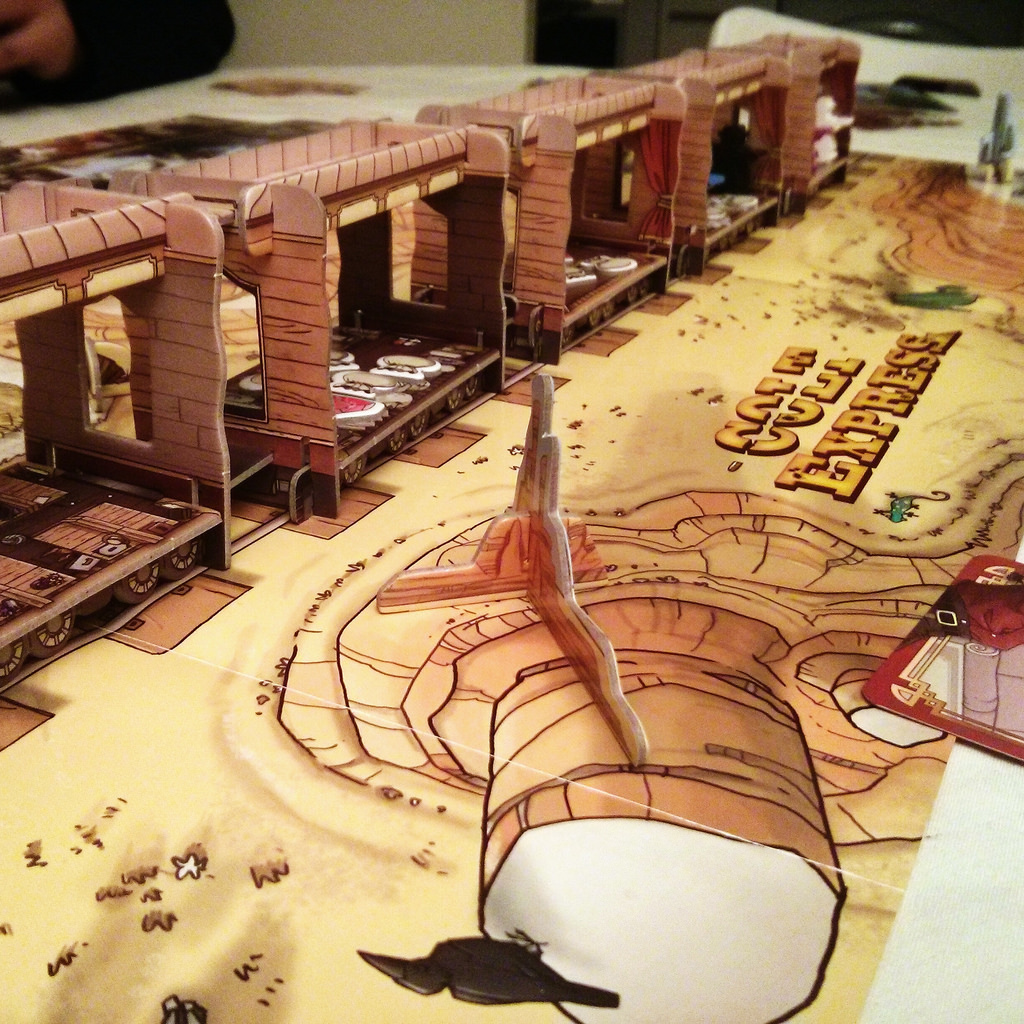
Colt Express
Photo taken by Hubert Figuière and posted to Flickr under the CC BY SA 2.0 License (Source).

Colt Express encourages players to plan

Colt Express would be a very boring game if it were a one-player affair. You could tell your player exactly where to go, what to do, and when to pick up cash. Yet with other players in the mix, you introduce all sorts of fascinating variables. Players can pick up money before you get to it – making you waste an action by trying to pick up cash that isn’t there. Your movement could be thwarted by someone shooting you and knocking you back somewhere else. If a series of events conspires against you, you might end up walking into the marshal by mistake. Whoopsy-daisy.

It’s all these unknowns that make you have to not just play the game, but play the players. You have to anticipate what other people are doing. You have to guess their motivations. On rounds where everybody plays their cards face-up, this is easy. However, sometimes, you go through “tunnels”, which causes everyone to play their action cards facedown. When cards are face-up, you have to think on the fly. When cards are facedown, you have to think in advance.

There’s a larger subgame as well, because stacking cash too early can make you a target. Ideally, you want to come from behind so no one anticipates your actions.

Colt Express takes a mechanic with complex possibilities and uses its physical setup to teach players

Colt Express uses it components, its setup, its art, and its theme to really sell programmable movement in a way that feels perfectly sensible. Imagine yourself as a neophyte gamer for a moment. Programmable movement is a strange concept. New board gamers might liken it to a more extreme version of the dynamics found in Pokemon or old school Paper Mario. Yet in Colt Express, it never feels weird or awkward – even to new gamers I’ve played with.

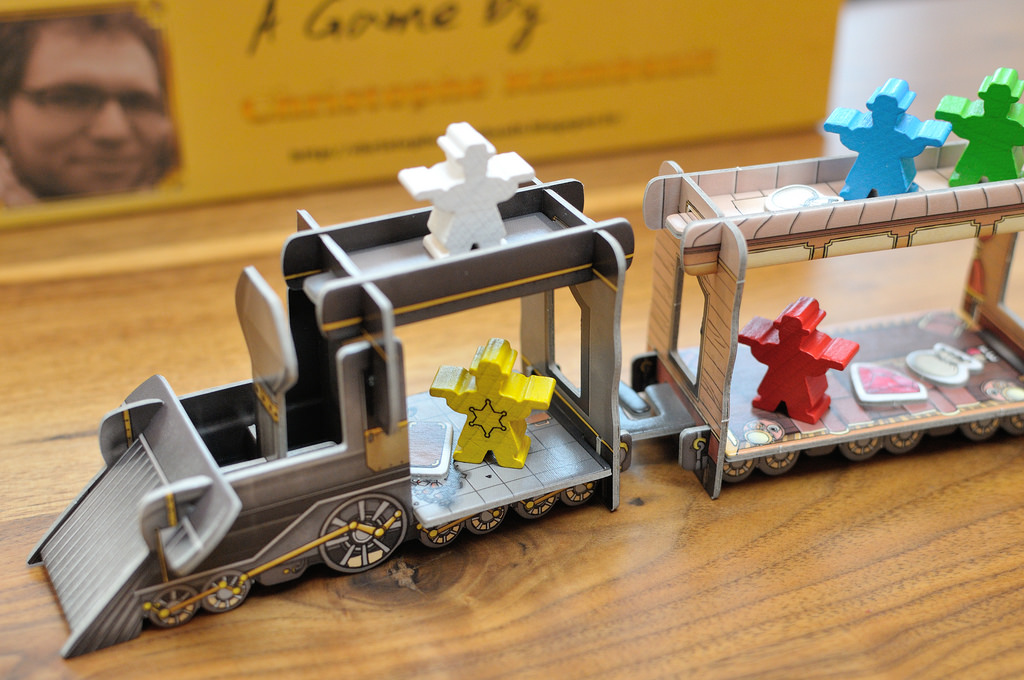
Colt Express Uses Verticality
Photo taken by yoppy and posted to Flickr under the CC BY SA 2.0 License (Source).

The pretty train in Colt Express isn’t just for show or sales. Using three dimensions helps new players visualize their moves. It helps people to think four moves in advance, as they must in Colt Express. The theme also helps, since the idea of bandits stealing cash makes perfect sense as a narrative.

Consider for a moment how Colt Express would function differently as a 2D game. You could totally do it and it’d still be a great game! Just make a board with the two levels of the train depicted as different rows. It’s not hard to imagine…but it wouldn’t have the same staying power as a teaching tool. Some people learn well in the abstract, but others excel with spatial reasoningColt Express uses its rules, its theme, and its physical shape to reach out to different people who have different ways of processing information. That’s why it can sell a weird concept like movement programming in a lightweight game.


Colt Express is available on Amazon for $35.99. I definitely recommend that you check it out. It’s not just a great teaching tool for itself, but it’s a great teaching tool for design as well.