Games Speak through Mechanics, Not Rules

Posted on 3 CommentsPosted in Dev Diary

Dev Diary posts are made to teach game development through specific examples from my latest project: Highways & Byways.

Just here for Highways & Byways updates? Click here – it will take you right to the updates at the bottom of the page.


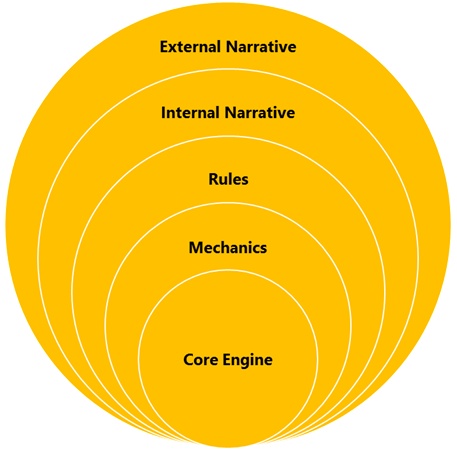
The mark of a great game developer is to make great complexity and interaction come out of simple elements. Ironically, though, ensuring simplicity can be a terribly complicated task. My ongoing development of Highways & Byways has got me thinking about the way that we, as game developers, communicate with gamers. I’ve come up with a theory which I call the Five Levels of Communication through Game Development.
Five Levels of Communication through Game Development

Looking for more resources to help you on your board game design journey?
Here you go: no email required!

Like this writing style?
Check out my latest blog on marketing here.

Games tell stories – whether they mean to or not. Chess tells a story. Pandemic tells a story. These stories are told, on purpose or on accident, through five different levels of communication.

This is why when I create games, I aim to evoke a certain feeling. In the case of Highways & Byways, I want you to feel a sense of wanderlust, as if you’re a young person taking an adventurous road trip in a lousy car. There are five ways game developers can communicate the feeling they’re trying to convey. I’ll provide an example of how Highways & Byways addresses each.

Core Engine: If you strip out all the mechanics that put obstacles in your players’ path, what’s left? Obviously not a very good or deep game, but there is still the pursuit of an objective. The core engine is the bare minimum set of mechanics you need to have a functioning game.

In the case of Highways & Byways, the core engine is moving around the United States, aiming to travel a certain set of beautiful byways. It’s a game about travel, exploring, and being in motion.

Mechanics: Games are not very good until you have constraints that make it hard for players to achieve the objective. Mechanics should add obstacles – whether that means the game itself is working against you or other players are. Mechanics include things like player elimination and hand management. Sometimes you consciously create them and sometimes they arise out of rules.

In Highways & Byways, construction slows players down by making some highways periodically impassible. That’s a mechanic. Players draft their destination cards in the beginning, trying to cluster them as close as possible (and sometimes making it hard for others to do the same). That’s a mechanic, a form of hand management.

Rules: These regulate the way mechanics are implemented. The line between rule and mechanic is really thin, and people will argue about the precise nature distinction (or even the existence of a distinction). To me, a mechanic is the concept behind the game and the rule is the way that it’s handled to ensure balance.

Players draft destination cards at the beginning of Highways & Byways. To keep the drafting fair, there’s a rule that says “the first person to pick changes every time, going clockwise.” That way, nobody gets first pick all the time. Likewise, sometimes, you’ll draft something that’s really terrible. Everybody will then get a chance to “mulligan” 2 of 16 destinations they really don’t want to go to.

Internal Narrative: The game also speaks to players not just through the core engine, mechanic, and rules – which constitute the gameplay. It also speaks to players through its theme, story, art, components, and even box design. The internal narrative covers everything about the game itself as a complete product minus the gameplay.

Once Highways & Byways is farther along, I’ll be commissioning art, polishing up its theme, trying to find 3-D printed car pieces (if economically feasible), and making a gorgeous box. That’s all part of the internal narrative (which I haven’t even begun to flesh out yet).

External Narrative: Games are more than just what’s in the box. Games are also the marketing used to promote them – the advertising and the footwork of the game developers who made them. Games are also the Kickstarter campaign and the stores they’re kept in. Games are the community that talks about them on forums and plays them at conventions. Games become everything that people claim that they are.

Highways & Byways is a game, but it’s also a series of blog articles, and a Twitter account. One day, it will be a Kickstarter campaign. I’m making this up as I go along and even as I write this very sentence. Everything I do online and everything others say online changes what this game means to you.

Great games communicate valuable gameplay information at the lowest possible level, preferably core engine and mechanics. One well-made mechanic can resolve the need for ten well-made rules.

My approach to Highways & Byways is very distinct from my approach to War Co. In War Co., I made the game as simple as I knew how to at the core engine and mechanic levels. However, it was still a rule-based game by necessity. That’s fine, however, it’s not optimal. With Highways & Byways, I’m aiming to communicate with players through the core engine and mechanics. If you misunderstand the rules a little bit, I want the game to be just as playable as it would be if you understood them perfectly.

So what made me do all this theorizing in the first place?

Last week I relentlessly ragged on my poor attempt to implement “the traffic mechanic.” The idea was that travel is too easy in the game, so you could slow your opponents down by placing traffic delays and road closures near them. This mechanic was poor from a theme standpoint because it implied players were omnipotent traffic gods. Yet it was even worse from a rules standpoint. Think about the amount of “thou shalt nots” the rules would have to spell out to prevent players from boxing others in, immobilizing them. The mechanic was so inelegant that it would have required a ton of rules to make the game balanced.
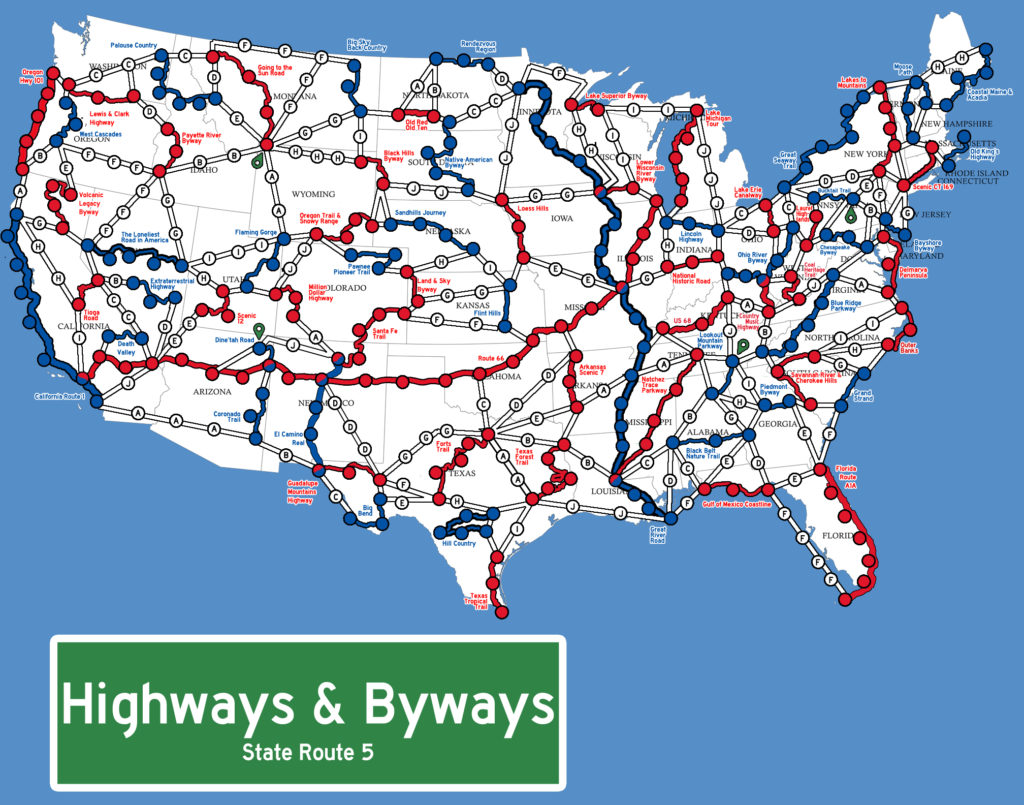
I’ve replaced the traffic mechanic with the “construction mechanic.” As I did this, I created version 4 of the game (titled “State Route 4” to keep with the theme). Instead of players choosing where traffic is placed, all highways – basically the fast routes – have one of ten letters on them. Every turn, a construction card is drawn. Players cannot pass any highways whose letters match that of the construction card drawn that turn. My brother and I tested this, and it shows promise.

The construction mechanic requires two or three rules to work. The mechanic stands almost alone in communicating what happens in the game. If the big, bright, orange card turns over with a big letter “B” on it, then you can’t pass B roads. Really straightforward, unlike the traffic mechanic that allowed players to place delays (just as long as they meet these 117 criteria first).

People don’t read rule books very thoroughly, so if your game plays intuitively because of good mechanic design, you have an edge in the market. Just like a movie that can be understood with the sound off, a game that can be played with the rules only skimmed is a sign of clear direction.


Key Takeaways for Game Devs

  • The mark of a great game developer is to make great complexity and interaction come out of simple elements.
  • The Five Levels of Communication through Game Development


    • Core Engine: the bare minimum set of mechanics you need to have a functioning game.


    • Mechanics: the constraints that make it hard for players to achieve the objective.


    • Rules: regulate the way mechanics are implemented. A mechanic is the concept behind the game and the rule is the way that it’s handled to ensure balance.


    • Internal Narrative: everything about the game itself as a complete product minus the gameplay.


    • External Narrative: the marketing and the community.
  • Great games communicate valuable gameplay information at the lowest possible level, preferably core engine and mechanics.
  • You want your mechanics to stand almost alone in communicating what’s happening in the game.
  • People don’t read rule books very thoroughly, so if your game plays intuitively because of good mechanic design, you have an edge in the market.

Most Important Highways & Byways Updates

Mentioned Above:

  • I updated game to version State Route 4.
    • This replaced traffic mechanic with construction mechanic.
    • Reduced board crowding by combining some roads and removing others.

Not Mentioned Above:

  • I play tested State Route 4.
    • My brother and I both liked the construction mechanic and agreed it had potential.
    • Identified issues.
  • I updated the game to version State Route 5.
    • I properly marked starting locations on the map.
    • I introduced the Car Choice mechanic.
    • I introduced the Event Pool mechanic.
    • Early testing so far indicates both the Car Choice and Event Pool mechanics have promise.
    • The Event Pool mechanic is going to need a lot of refinement – probably over several game versions.


How to List Your First Game on Board Game Geek

Posted on 3 CommentsPosted in Know-How

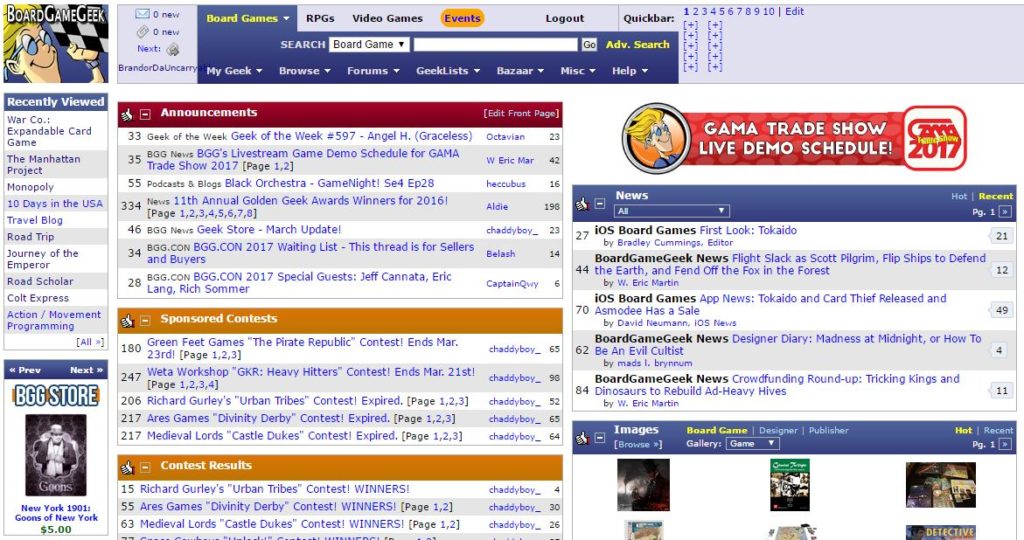
Board Game Geek is the online mecca for board gamers. There is no site like it. It’s extraordinarily popular and an immense repository of all the board game data you can imagine. It’s an agreed-upon gathering place for gamers to an extent that most other hobbies cannot relate to. I cannot overstate the importance of Board Game Geek to the board game community.

Looking for more resources to help you on your board game design journey?
Here you go: no email required!

Like this writing style?
Check out my latest blog on marketing here.

Now, you don’t have to post there every day to succeed. In fact, there’s plenty of benefits to be reaped simply by lurking on the website. However, ignoring it is foolish. I think that many game developers make the mistake of ignoring Board Game Geek because of its intimidating design. Please don’t make that mistake.

Board Game Geek
Hey, at least it’s not a generic WordPress theme!

I could go into the nuances of Board Game Geek as a social system. I could also go into detail about how to best use the data available on the site. I’m not going to do that. That could be an entirely different article…which I may very well make one day soon!

In this guide, I’ll be showing game developers how to get board games listed on Board Game Geek. As I write this article, I’m going to assume this is your first board game, that neither your team members nor your publishing company are entered into the database, and that you have a Board Game Geek account. (If you don’t have an account, sign up here.)

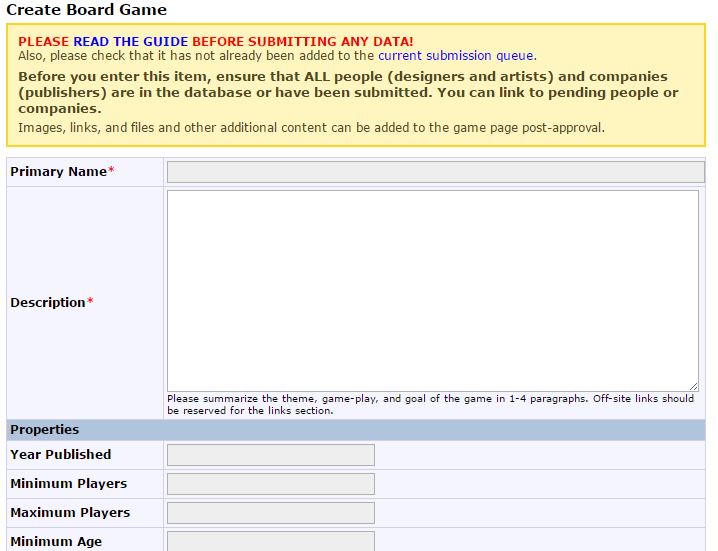
Before you get your game listed on Board Game Geek, it’s helpful to understand their data model. You can enter Board Games, People, and Publishers. Board Games reference People and Publishers. People include artists, designers, and other staff involved in making a Board Game. Publishers are the companies that publish Board Games. A good Board Game needs People and Publishers, as well as a lot of other information.

Here’s where it gets weird.

You need to make People and Publishers first…but you can’t have People and Publishers without games. You have to submit the People and Publishers entries first. Then you have to reference the People and Publishers in the Board Game entry. Then you submit the Board Game entry. Lastly, you go back and edit the yet-to-be approved People and Publishers entries to reference the new Board Game entry.

Clear as mud? Great! Let’s continue!

Another important consideration is when you submit your Board Game entry. You need to wait until your game is very close to complete and preferably publicly reviewed. However, if you’re going to be doing a Kickstarter campaign, you need to make sure you make a Board Game entry at least a week or two before the Kickstarter.

Alright, let’s get started…

Step 1: Submit Entries for All Designers and Artists

Navigation: Misc > Add to Database > Person

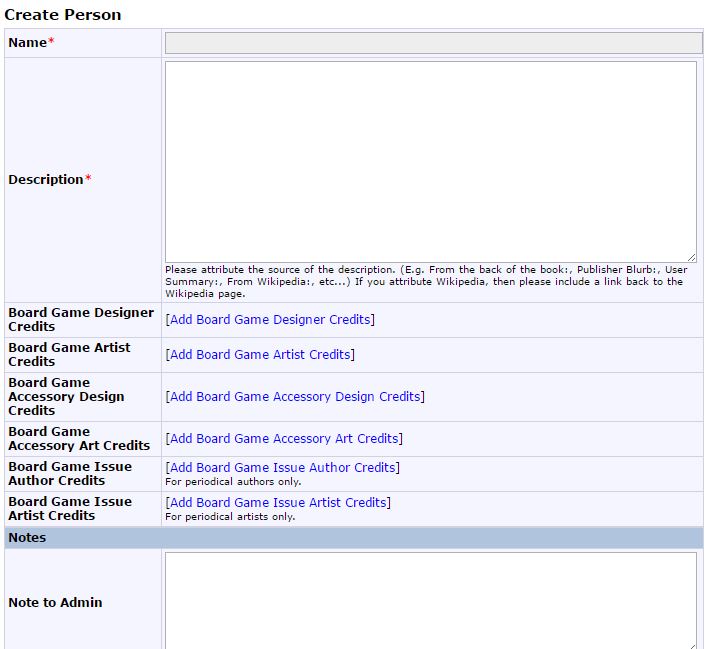
Create Person on Board Game Geek

For each designer and artist involved in the creation of your game, make a Person entry. The most important fields to fill out are Name and Description. The credits sections can be filled out after you’ve got a Board Game entry pending.

You don’t have to fill out the Note to Admin field, but you may choose to mention that you are making a Board Game entry and linking it in the credits shortly after submitting this entry. You may also choose to type nothing but a smiley face. It’s up to you.

Step 2: Submit an Entry for the Publisher

Navigation: Misc > Add to Database > Publisher

Create Board Game Publisher on Board Game Geek

If your publisher doesn’t already exist in the Board Game Geek database, create a Publisher entry. This would apply to your company, if you have created your own company with intention to self-publish. That’s what I did by publishing War Co. through Pangea Games, which I own.

The most important fields to fill out are Primary Name and Description. The credits sections can be filled out after you’ve got a Board Game entry pending. Again, the Note to Admin field doesn’t have to be filled in.

Step 3: Submit an Entry for the Board Game

Navigation: Misc > Add to Database > Board Game

Create a Board Game Entry on Board Game Geek

Here is the real beast that you have to slay to get your game listed. The fields you need to fill out include are spelled out below. The rest is optional, but you should include it if you can.

The fields you should definitely fill out include:

  • Primary Name: Use the name of your game as you’d like it to appear on the Board Game Geek listing.
  • Description: A couple of paragraphs to describe your game. Use other listings as reference material when writing your description.
  • Year Published
  • Minimum Players
  • Maximum Players
  • Minimum Age
  • Playing Time
  • Category: The specific type of game, chosen from a list. No free text.
  • Mechanic: Mechanics involved in playing the game, chosen from a list. No free text.
  • Designer(s): Reference the pending Person entry or entries of your designer(s).
  • Artist(s): Reference the pending Person entry or entries of your artist(s).
  • Version Nickname: Anything you want it to be.
  • Version Publisher: Reference your pending Publisher entry.
  • Version Artist(s): Reference the pending Person entry or entries of your artist(s).
  • Year Published
  • Product Code (if you have bar codes – if you don’t, please see a reputable bar code reseller such as Buy A Bar Code)
  • Dimensions: The size of your game.
  • Weight
  • Languages: Chosen from a list.
  • Release Date: Pick an anticipated release date if your game is not out yet. You can edit this later if you have to.

Step 4: Edit the Person and Publisher Entries to Reference the Board Game

Navigation: Click here to find your pending Person entries. Click here to find your pending Publisher entries.

Phew. That’s a lot of data. Now all you have to do is go back to each Person and Publisher entry to reference your pending Board Game entry.

For each designer, edit their Person entry by clicking [Add Board Game Designer Credits] and clicking on your pending Board Game entry.

For each artist, edit their Person entry by clicking [Add Board Game Artist Credits] and clicking on your pending Board Game entry.

For your publisher, edit the Publisher entry by clicking [Add Board Game Credits] and clicking on your pending Board Game entry.


There you have it! It’s a lot of information to absorb, but following these steps is a surefire way to have your game listed on Board Game Geek in no time. Keep an eye out for emails from the Board Game Geek admins once you submit your entries. They may require some modest changes.

If you do this and you find that the process works a little differently for you, let me know what you find and I’ll revise this guide. I want to keep it up to date!

Please share your experiences in the comments.


Spotting and Dropping Bad Mechanics

Posted on 1 CommentPosted in Dev Diary

Dev Diary posts are made to teach game development through specific examples from my latest project: Highways & Byways.

Just here for Highways & Byways updates? Click here.


Most board game mechanics will not work as well as you intend them to. Good board game developers need to know when to drop mechanics and when to refine them. It’s not an exact science. My experiences with developing Highways & Byways this week have made me want to talk about this.

Looking for more resources to help you on your board game design journey?
Here you go: no email required!

Like this writing style?
Check out my latest blog on marketing here.

A little bit of background information, as well as an update. I’m continuing early play tests of Highways & Byways. The core game works, but it lacks a substantial challenge and doesn’t have much interaction between players. I’ve been playing with a new mechanic called “traffic.” Players could place road closures and travel delays on roads near their opponents to slow them down. It was about as fun as actual traffic. Back to the drawing board!

Traffic Jam
Yes, I thought this would make a good mechanic a week ago.

As a general rule of thumb, if a mechanic breaks theme immersion, is fiddly by necessity, or doesn’t mesh with existing mechanics then save yourself the time and drop it. If a mechanic is clumsy in execution but seems like it could be fun, continue testing with it, but always remember that you may have to drop it later.

I dropped the traffic mechanic because it was incorrigibly awful. It was fiddly, requiring players to place a lot of pieces. It would require a ton of rules to keep players from simply boxing others in with traffic. Not to mention, it makes players “traffic gods” with the ability to spawn traffic jams across the country WITH THEIR MINDS. My brother and I looked at each other and shook our heads. I dropped the traffic mechanic, upgraded to the next version of the game, did a little bit of housekeeping, and created a new mechanic in its place. It’s called the construction mechanic, which is randomly generated. It’s clumsy, but early tests show promise. I might end up in the same situation a week from now, but such is the iterative nature of game development.

With this mini-failure in mind as an example, what can game devs learn about spotting and dropping bad mechanics? It bears repeating that board game development involves tons of experimentation. What you expect to work probably won’t, and sometimes ridiculous ideas wind up being brilliant. So it goes. You’ll have to generate a ton of ideas to make a great game and bury most of them. All things equal, fewer mechanics are better. You want game complexity to arise from interactions, not mechanics or rules.

In the spirit of rapid iteration, then, how do you churn through ideas to improve your odds of reaching the good ones quickly? You have to drop bad mechanics early. Save yourself the time. Try something else. To me, trying to force a bad mechanic is like trying to force a key into a door. It’s a great way to break a key.

Forcing a key
Don’t force a key. Don’t force a mechanic.

Here are five signs of a bad mechanic. Any of the following could ruin a mechanic. Fortunately, the traffic mechanic touches on all of these, which makes it a fantastic example for the signs below:

Sign 1: the mechanic breaks immersion or tone. The Highways & Byways traffic mechanic implied, through its very existence, that players have the ability to change traffic patterns halfway across the country. That makes no sense and it breaks immersion. That alone was reason enough to get rid of a mechanic. The same can be said of cutthroat take-that person-versus-person mechanics in a sunshiny game – it’s just off-putting.

Sign 2: the mechanic conflicts with the core engine. The Highways & Byways game depends upon the relatively unrestricted ability of players to move around the board. The traffic mechanic led to players blocking off roads really close to others. That slowed down travel time just about every turn. It’s like making Sonic the Hedgehog slow. If you make a game about building skyscrapers, this is equivalent to making a mechanic around gathering building permits.

Sign 3: the mechanic conflicts with other tested and liked mechanics. Early game card drafting is working beautifully in Highways & Byways. It gives you a chance to strategize, interact with your opponents, and write your destiny. The traffic mechanic made certain more isolated roads in the midwest and mountain states really unattractive, since there were fewer ways in and out. That meant your opponents could box you in with traffic, which made the more connected northeast more attractive. It upset the whole drafting balance.

Sign 4: the mechanic requires fiddly tracking. The traffic mechanic required extra pieces to be scattered across the board. In this case, it wasn’t so bad, but in general, you want to have to track as little data as possible. For example, if you’re making a fighting game with Life, Stamina, and Endurance trackers, consider simplifying that into one piece of data, such as HP.

Sign 5: the mechanic has to be reigned in with a bunch of rules. I tried making the traffic mechanic work, by saying things like “you can’t place two traffic pieces in a row” and “it’s gotta be three spaces away from each person” and “you can’t box opponents in.” It felt like a Rube Goldberg machine. You don’t want to stress out your players by making them remember too much. Rules come with a sort of cognitive overhead which you want to minimize for the sake of accessibility if at all possible. Games are always misunderstood when played for the first time. More rules increase the chances of devastating misunderstandings. Misunderstandings decrease the chance of getting that second or third play. Failure to get to play #2 or #3 – no matter how good your game is – damages the chances of selling your game.


Key Takeaways for Game Devs

  • Most mechanics you experiment with are not going to work.
  • Make your game function with the fewest possible mechanics.
  • You want game complexity to arise from interactions, not mechanics or rules.
  • If a mechanic is bad, drop it early, save yourself some time, and try something else.
  • If a mechanic breaks your theme immersion or doesn’t match your game’s intended tone, drop it.
  • If a mechanic conflicts with your game’s core engine, drop it.
  • If a mechanic conflicts with other game mechanics that you’ve already tested and that you like, drop it.
  • If a mechanic requires a lot of fiddly pieces for tracking, drop it.
  • If a mechanic requires a lot of rules or explanations, drop it.
  • If a mechanic shows potential, keep it and refine it. Remember that you might have to drop it later.

Most Important Highways & Byways Updates

  • I completely dropped the experimental traffic mechanic. It was as fun as actual traffic.
  • I leveled up to the next version of the game: SR03.
  • I introduced a new mechanic called construction in SR03.
  • When I mentioned housekeeping above, this is what I’m referring to. I’d love to go into more detail about the following later, but that’s out of the scope of this article:
    • Simplifying road names
    • Cleaning up sloppy board design
    • Creating postcard style cards