Overcome the Horror of Creative Freedom and Turn it into Fun

Posted on 1 CommentPosted in Motivation

“Man is condemned to be free; because once thrown into the world, he is responsible for everything he does.” – Jean-Paul Sartre
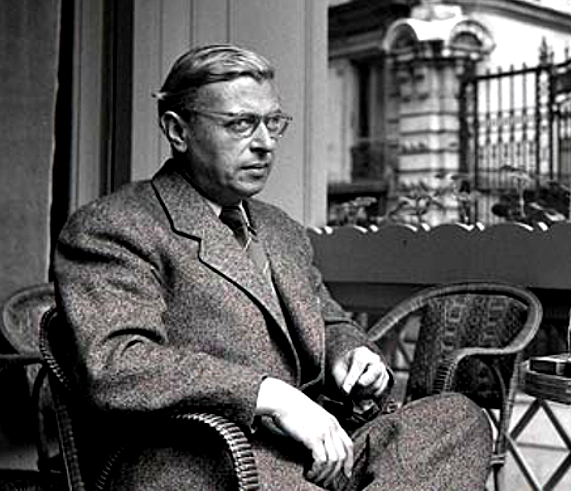
Jean-Paul Sartre, looking for the exit. (Spoiler: there is no exit.)

Even having written many posts for this blog and a novel’s worth of lore for War Co., the blankness of the unmarked page still gives me the chills. That blank page could be anything. Before you write on it, it is everything and it is nothing, the most perfect work of literature and the most grammatically defunct Internet copypasta shlock. Creative freedom is intimidating, even horrifying, because suddenly you assume the responsibilities of creating a cohesive product, testing and perfecting it so it reaches its potential, and sharing it with people who don’t see what you do.

Except that’s not really true, is it?

Looking for more resources to help you on your board game design journey?
Here you go: no email required!

Like this writing style?
Check out my latest blog on marketing here.

I’m not convinced that writer’s block, in and of itself, exists. What I do think exists is the fear of starting. When it’s time to get creative, throw out your preconceptions of right and wrong. Yes, game development, novel writing, music making, film production, and all the other creative endeavors require a lot of iteration and rigor. You have to find your destination by making wrong turns. It’s all too easy to take these feelings to heart and say “this isn’t good enough” when you’re making something.
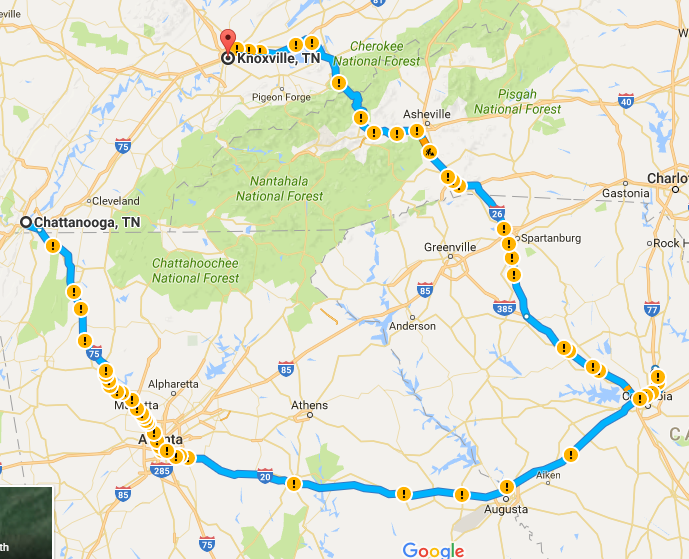
Even if you get horribly lost on the way to your destination, you might find a good BBQ place or something.

My response to the gaping chasm of creative freedom is to laugh. I laugh because the flip side of creative freedom gives me one amazing privilege: failure in a safe environment. Your first draft can be as terrible or brilliant as you want. You’ll likely be the only one to see it, so don’t sweat the rough edges. As I see it, if you start doing something, one of three things can come as a result:

You make something brilliant with a few rough edges. A little polish and you have a readymade work of art. Something for the Spiel des Jahres.

You make something that’s shaky, but with sporadic moments of cleverness. From the cleverness, you build the connective tissue of your game. Trial and error. You’ll eventually have something.

You make something unabashedly terrible. There’s nothing redeeming about it. In that case, you don’t have those bad ideas in your head anymore and you can analyze your work for flaws. In essence, you purge yourself and you can make a plan to get better.

When I think of it that way, I feel better about the radical Sartrean freedom of the blank page. There’s no pressure. Anything you create opens doors.


Pandemic: Getting People to Work Together

Posted on 8 CommentsPosted in Game Breakdown

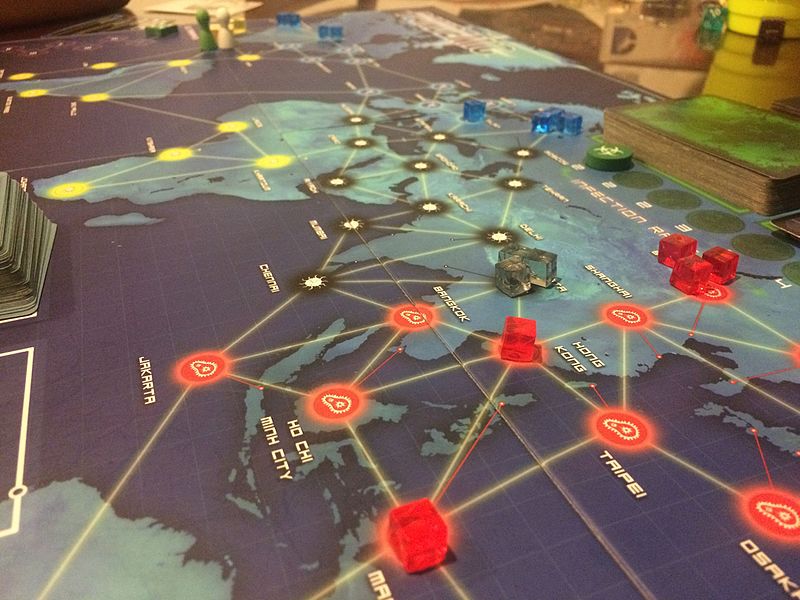
Roll up your sleeves and go to the nearest CVS for your flu shot. Today’s breakdown is for Pandemic, one of my favorite board games of all time. In fact, this is the one for me – the one that opened my eyes to the larger board game community. It is the one that broke me out of the prison of Monopoly, Yahtzee, and other games that many hardcore board gamers love to hate with an irrational vigor.

pandemic1
Photo taken by PadaguanOwn work, CC BY-SA 4.0, Link

Looking for more resources to help you on your board game design journey?
Here you go: no email required!

Like this writing style?
Check out my latest blog on marketing here.

Pandemic blows the minds of a lot of new gamers because it’s often the game that introduces the concept of cooperative board game play. That alone is enough to make it special, but it’s no one-trick pony. You play as members of the CDC fighting four pandemics, each of which are constantly threatening to wipe whole metropolitan areas off the map. The game excellently conveys this tension with a steady drip-drip-drip of new infections (often in already ill areas), sporadic and disastrous “epidemics”, and extremely well-connected cities. Meanwhile, you have only a handful of players working 24/7 to contain the disease, prevent outbreaks, find a cure, and work within the limitations of your time and resources.

Pandemic is a cooperative game for 2-4 players. All players work together to beat the game. You win together or you lose together. There are four diseases, each represented by a different color cube – red, yellow, blue, and black. The objective is to cure all the diseases by collecting five cards that correspond to each color and discarding the cards at a CDC research station.

Here’s the three main obstacles to success:

  • These diseases slowly add up in different regions. When more than 3 cubes of one color end up on one city, there’s an outbreak, and you have to put a disease cube on each connected city (infecting up to SIX others). If you hit 8 outbreaks, you lose. Outbreaks can cause chain outbreaks, too, so if you get one, you’re likely to get two or three or four at the same time.
  • If you run out of cards to draw, you lose. This is basically a time limit.
  • If you run out of disease cubes, you lose because your disease is too far spread (or the makers of the game were cheap, we’ll never know which).

Pandemic is easier to play than describe, so I won’t get into much more detail. What I’ve said so far is enough background to understand the points I’m going to make. Here are three reasons Pandemic is excellent at getting people to work together.

The goal is simple.

Cure the disease! Somebody collects five cards of the same color and discards them at a research station. Then the disease is cured. Do this for each color and you win.

The simplicity of this objective really pins the game down, since the logistics can get hairy. Some decisions you may face include: passing color cards between players, efficiently moving around within the limits of the four-action-per-turn rule, and containing the disease so you can keep it under control long enough to develop a cure.

Experienced players can do the heavy lifting while neophytes can intuitively understand why the table leaders are doing what they’re doing.

You have to contain the disease to minimize outbreaks, a game of tactics.

Pandemic is a team sport. No player can carry the game – it’s impossible. If you try to collect cards and develop cures while completely ignoring the festering pockets of disease in Jakarta or Johannesberg or Osaka, you’re going to get your respective butts handed to you. Some players may opt to keep diseases under control. Some may set up a network of research stations (for easier transportation and pursuit of the overall objectives). Others may focus heavily on finding the cures. There’s a lot of factors to balance, and communicating with your team for long enough to coordinate actions is critical.

You have to plan around contingencies because of the element of chance.

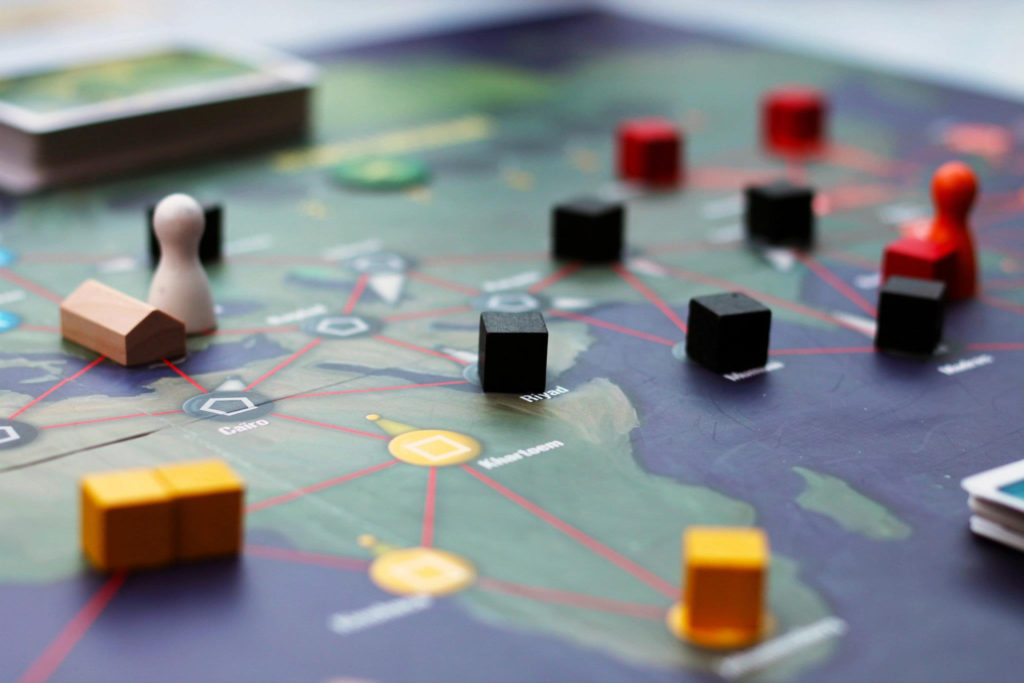
Pandemic Board Game
Photo taken by Jana Reifegerste and posted on Flickr. Licensed under CC BY SA 2.0 (Source)

Epidemic cards are effectively random. They can pop up at any time and put three disease cubes on a city. This can cause already infected cities to explode into outbreaks and completely clean cities to become hotbeds primed for disaster. When an epidemic card comes up, you and your team have to work together to respond very quickly, even at the expense of your previous tactical objectives and your overall objective of curing the diseases.


There’s a lot of ground I haven’t covered. There are subtle nuances of movement in Pandemic. Extra tactical and strategic elements are provided by different roles. Diseases, because of some niche rules around epidemic cards, tend to – quite sensibly – get worse in cities that are already infected. It’s a well thought-out game that captures the tension and coordination of crisis control.

Now excuse me while I complete this application for medical school.


What is a game?

Posted on 1 CommentPosted in Philosophy

I’ve given some thought to the difficult question of why we play games, yet I believe there was an implicit question left unanswered: “what is a game?”

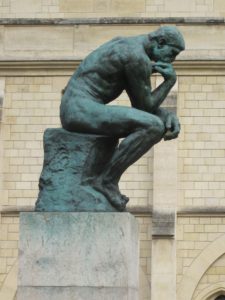
The Thinker Statue
“Hmm…what is a game?”

Looking for more resources to help you on your board game design journey?
Here you go: no email required!

Like this writing style?
Check out my latest blog on marketing here.

Oh, wise dictionary.com, elucidate us on this issue:

game, noun

1. an amusement or pastime

2. the material or equipment used in playing certain games

3. a competitive activity involving skill, chance, or endurance on the part of two or more persons who play according to a set of rules, usually for their own amusement or for that of spectators

Well, that didn’t help much. Definition 1 is pretty vague, definition 2 refers uses “game” to define “game”, and definition 3 still seems too abstract.

There’s two words that stand out to me in definition 3 that get the wheels in my mind turning: “competitive” and “rules”. “Competition” can mean players playing against each other or against the game itself – either way works. “Rules” is broad enough to include anything – complex or simple – that stops the competition from being a free-for-all play activity (e.g. Calvinball).

I have a personal theory, which I call Objective-Constraint, which underpins all games as we understand them. All games are forms of recreation with an objective (a goal) and constraints that stop you from reaching this objective. You have to have both. Reach for an objective without the constraints and you just have no competition. Keep the constraints and take away the objective – you, again, have no competition because there’s no yardstick by which to measure your success.

Boom! Problem solved: games have to have objectives and constraints. Easy. Next!

It’s not quite that simple. This is a complex philosophical question, as well as an incredibly semantic one. In fact, spending a lot of time defining “game” doesn’t mean all that much if your first language is German, French, or Swahili. The dictionary definition assigned to your version of the word “game” would be different, as would the social complexities associated with the word.

This question isn’t important because there’s a hard definition. It’s important because it forces you to think about what the word “game” means so you’re not mindlessly describing yourself as a “gamer” or “game designer”. If you make board games your trade, you need to come up with your own definition. From asking yourself the most basic question possible, you’re building a foundation of understanding that will make you a better designer and a better gamer.

I do not have the answer to “what is a game?” I only have an answer that works for me. Ask yourself “what is a game” and find an answer that works for you. Then let me know what it is in the comments.