
What Would Kickstarter do for the Board Game Industry in an Ideal World?

Posted on Leave a commentPosted in Philosophy

Within the board game community, there is no site that has shaken up the industry more than Kickstarter. While BoardGameGeek has been around for almost 17 years and remains the unquestioned mecca of the board game community, nothing has had more influence on board games recently than Kickstarter. Indeed, Kickstarter has radically changed my life as well. Many of you know me through my own game, War Co.
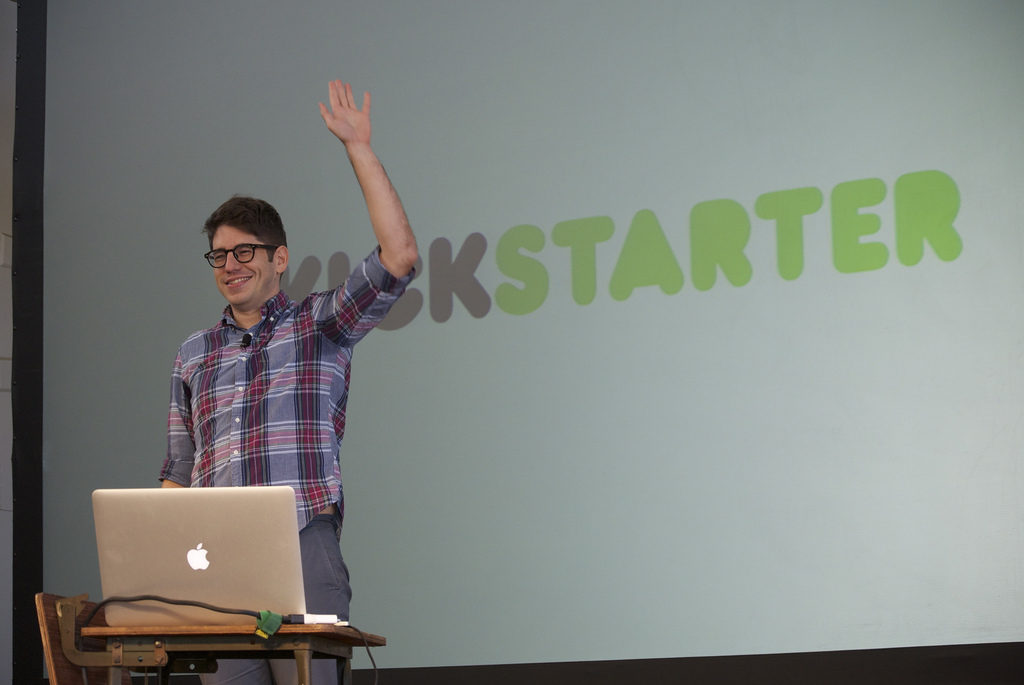
Raise your hand if you think Kickstarter is pretty cool.
Raise your hand if you think Kickstarter is pretty cool. Photo taken by Rex Hammock and posted to Flickr. Licensed under CC BY SA 2.0 (Source).

Looking for more resources to help you on your board game design journey?
Here you go: no email required!

Like this writing style?
Check out my latest blog on marketing here.

Skeptical of my claim about Kickstarter being the biggest mover and shaker in the industry? In 2015, almost $200 million was raised on Kickstarter for board games. At the time, the industry was worth about $880 million, with the majority of that being for existing collectible card games like Magic: the Gathering, Yu-Gi-Oh!, and Pokemon. It’s become standard practice for board game designers and publishers to raise capital through Kickstarter – meaning everyone from one-person businesses like me to large and well-established publishing companies are competing on the same field.

Kickstarter has a net positive impact on the board game community. Small ideas are given a chance to shine and a legitimate platform that people understand is for raising money. Large companies get to refine ideas and minimize risk before launching projects. Everyone – the most indie developers, the established companies, the fans, and the investors – get to participate in an open forum. Kickstarter exists to help people refine their ideas.

education-548105_1920

Yet even with my sunny disposition toward Kickstarter, I’m going to identify two dangers with crowdfunding that we need to watch. They’re already issues and they could ruin the platform if we don’t keep them in check. In my opinion, these two issues are the only things holding crowdfunding back from its ideal world.

Problem 1: Small and inexperienced developers can’t compete with the established companies without extreme effort. This is by no means a defeatist statement. If you’re a first-time game developer and you want to make something beautiful and fund it through Kickstarter, do not throw in the towel. Kickstarter is awesome and I made it work.

If you’re an inexperienced developer, you have to go out of your way to prove your idea is worth backers’ donations. Release a free print-and-play. Make a video play-through. Get as much art as you can. Complete as much as you can before Kickstarter. Leave a little room for backers to provide input. Do your homework. Pay for as much as you can.
boardgame07
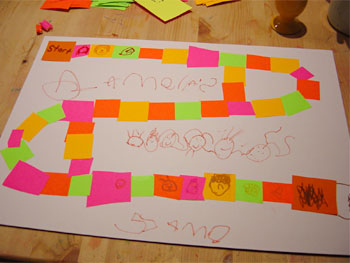
Creators: before you bring a product to Kickstarter, make sure that it’s *really* close to completion.

Backers, if you see an inexperienced developer, and you’re not sure whether their work is going to be worth your money, your skepticism is warranted. There are incredible choices available to you on Kickstarter. There’s more great choices than you have money for, most likely. Just remember: the community grows when talented individuals “come out of nowhere”. When you invest in someone who is starting out, you’re giving the board game industry room to grow.

Problem 2: Some types of games do better on Kickstarter than others, thus populism and conformity abound. If the pitch is clear and a game resembles something else that already exists, it has a better chance of success. Complex ideas, weird ideas, artsy ideas, “truly indie” ideas are harder to wrap up in a bow and compare to other games that already exist. As a result, they tend to languish in obscurity while a generic game with miniatures succeeds.

If you’re a developer and you made something weird, strengthen your coalition of fans. Play your game with others as much as you can before the campaign. You always need to do this anyway, but it is extra important if your game is hard to describe.

Backers: look under the surface of pitches. Take a chance on something weird every once in a while. Remember that one of the greatest games of all time, Twilight Struggle, takes about five games to understand and fluently play.

Kickstarter has been a godsend for the board game community. It’s led to an exponential growth in awesome ideas. It’s helped us to set incredible standards on game quality because it breaks down the barriers between creators and fans. It is the ultimate tool of iteration. We all need to collectively work to give the indie productions a chance and to take a risk on strange new ideas.

The perfect Kickstarter community is achievable.


Making a Game Plan

Posted on 3 CommentsPosted in Know-How

When I refer to “making a game plan”, I don’t mean a plan to create a board game. I mean a game plan for tackling big, hairy audacious goals. How do you go from a big dream like “I want to create a successful board game” to reality? What does it take to make dreams come true?

Looking for more resources to help you on your board game design journey?
Here you go: no email required!

Like this writing style?
Check out my latest blog on marketing here.

The answer involves a lot of hard work, iteration, and changes in direction. Yet even with this in mind, a little bit of planning goes a long way. If you have a dream, you’re already on the right track to making a game plan. To steal a line from Stephen Covey, you’ve already “[begun] with the end in mind.”

Open up an empty document on a writing program of your choice. Write your goal at the top. Underneath it, write some basic steps that you need to complete to reach your goal. Here’s an example.

  • Create War Co.
    • Design game
    • Test game
    • Buy art
    • Raise money
    • Print cards
    • Sell cards

Already you’re off to a better start than before. Take each of those steps and break them down further. Here’s another example.

  • Buy art
    • Search online galleries such as DeviantArt for talented artists
    • Make a list of artists to contact
    • Keep spreadsheet to keep track of artist contact information and responses
    • Contact artists
    • Find out which artists do work for commission
    • Compare work and prices
    • Choose an artist
    • Write a contract

Continue breaking down vague steps until you have a list of specific tasks you can take action on. I like to color code my list to keep track of what I’ve done and haven’t done. Black means it’s not started. Red means barely started. Yellow means in progress. Green means significant progress. Blue means done. Here’s an example:

  • Buy art
    • Search online galleries such as DeviantArt for talented artists
    • Make a list of artists to contact
    • Keep spreadsheet to keep track of artist contact information and responses
    • Contact artists
    • Find out which artists do work for commission
    • Compare work and prices
    • Choose an artist
    • Write a contract

You can always add or take away from your game plan, too. It’s not set in stone. For example, notice the item below that I added in black text:

  • Buy art
    • Search online galleries such as DeviantArt for talented artists
    • Search Instagram for talented artists
    • Make a list of artists to contact
    • Keep spreadsheet to keep track of artist contact information and responses

When it’s all mapped out, you could have a game plan that’s several pages long. That’s okay! You’ll also have to adapt and change things as you go along. But when you turn your big goals into a series of small ones, it’s a lot easier.

To quote the White Stripes’ song, Little Acorns, “take all your problems and rip ‘em apart / carry them off in a shopping cart. / And another thing you should’ve known from the start / the problems in hand are lighter than at heart.”


The Unexpected Virtue of Ignorance

Posted on 1 CommentPosted in Motivation

Ignorance is bliss. No, really! Sure, ignorance is a state in which no person should gleefully wallow forever since it will ultimately be their undoing. Even still, ignorance is a reliable shield from the emotional strain of the trials and tribulations of starting a business or beginning game development. If you are a first time developer, you know less now than you ever will, and that’s not necessarily a bad thing. The ignorant aren’t stressed out about the “unknown unknowns.”

Looking for more resources to help you on your board game design journey?
Here you go: no email required!

Like this writing style?
Check out my latest blog on marketing here.

If you ever get the feeling that you’re a big dummy in a room full of people whose minds contain vast libraries of information, I want you to take solace in a few things. The ignorant developers are the ones that Steve Jobs would think of as “staying hungry and staying foolish.” When you have no idea what you’re up against, you can make some incredibly unrealistic goals. That’s a good thing sometimes. Big dreams are, in fact, achievable. People underestimate the time it takes to get there, but the important thing is that the ignorant aren’t afraid to dream big because they’re not jaded yet. Dreaming big is a powerful ability that comes naturally to the ignorant and which the knowing can and must fight to maintain.

If you ever get the feeling that you need to do the reading, that you need to start somewhere – anywhere! – to get better, then congratulations! When you’re ignorant, it’s so much easier to start learning. You just have to accept that you’re ignorant.

Yes, it is true that some resources are lousy and will teach you wrong. But as a tabula rasa, you can learn new facts and develop new habits instead of fixing old ones. Just as it’s easier to refuse your first cigarette than to stop smoking, it’s easier to read about game design than to admit that you did it wrong and then start reading.

Nothing is available to the ignorant that isn’t to the knowing except for a clean slate. From an emotional perspective, it’s easier to start when you know nothing than when you do. Take advantage of it. Remember, that ignorance is not a state of mind to achieve. It’s just a great square one.