5 Questions to Beat Procrastination

Posted on 4 CommentsPosted in Know-How

Procrastination has an undeserved bad reputation. When I say procrastination, it may bring to mind images of someone watching cat videos or 1980s Arnold Schwarzenegger clips until 3 in the morning. It may bring to mind a college student sleeping until 11 and skipping his or her two morning classes.
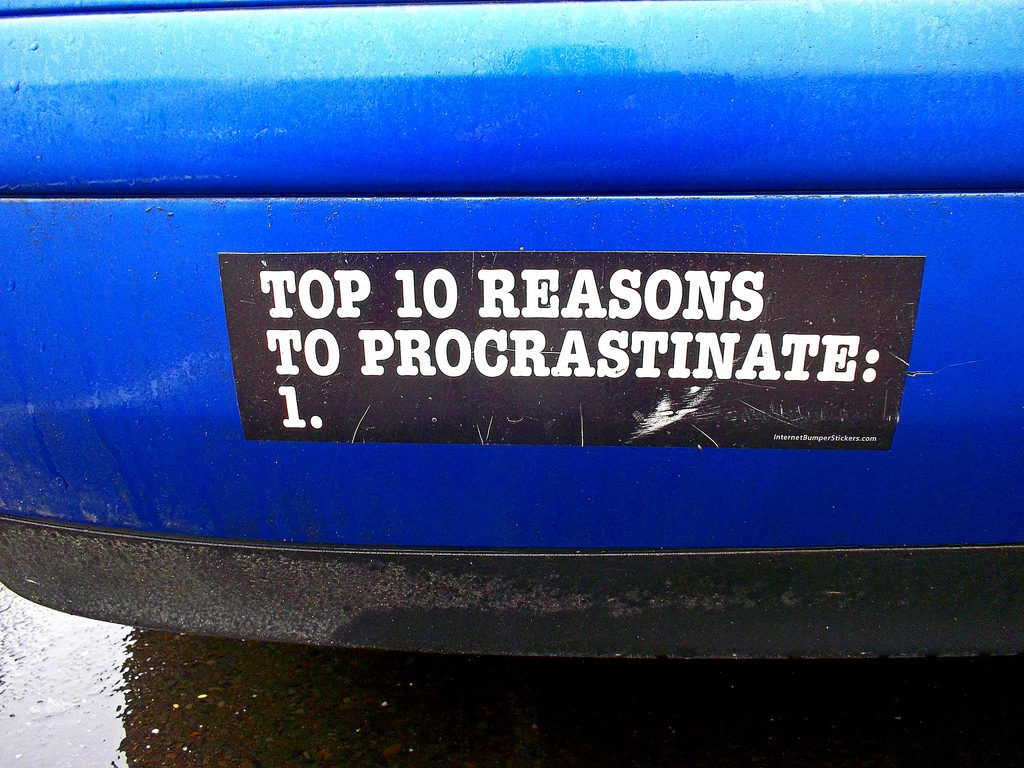
procrastination
This photo was taken by MTSOFan and posted to Flickr. It is licensed under CC BY NC SA 2.0 (Source)

Looking for more resources to help you on your board game design journey?
Here you go: no email required!

Like this writing style?
Check out my latest blog on marketing here.

How myopic to dismiss procrastination so quickly! My pet theory is that procrastination is actually our minds’ crude reaction to another issue. At its heart, procrastination is avoidance. You don’t avoid things for no reason at all. You avoid them because they’re unpleasant or because you’re tired or because there’s something better.

When I find myself procrastinating, I know that it’s time for a little introspection. I then ask myself these five questions:

  1. What do I want?
  2. What big steps do I take to get what I want?
  3. What small steps do I take to get what I want?
  4. What motivates me?
  5. What demotivates me?

What do I want?

It is extremely easy to avoid doing something if you don’t want to do it. Earth-shattering revelation, I know. But let’s face it: it’s exhausting to chase goals and it’s extra exhausting to chase goals you don’t even want to reach.

For a concrete example, let’s imagine you’re designing a push-your-luck game. Problem is that you don’t care for push-your-luck games! In this example, it makes sense that you should try creating a game you would want to play. Making War Co. would have been impossible for me to do if I didn’t fundamentally like the genre and the game I was making.

When you’re being creative, doing something you like is critical. The world’s best chef would probably be a very mediocre accountant.

What big steps do I take to get what I want?

A lot of people have a really good idea of what they want, but a lack of direction leaves them wandering and confused. I’ve been there, too. Sometimes it helps to write down what you want and outline the major steps it takes to get there. Having even a rough road map to reaching your goals makes them feel more real, more possible, and less abstract. If you want your goal and it feels real, you’ll be less inclined to procrastinate.

What small steps do I take to get what I want?

Sometimes having a rough outline won’t cut it. If you know what you want and the basic way of getting there, break it down until you have small, achievable, specific, bite-sized steps. It’s highly motivating to be able to accomplish something toward your goals every day.

Keep tweaking your to-do list until it’s open enough to give you freedom, but defined enough to keep you moving.

What motivates me?

If you know what you want and have a very strong idea of how to get there, sometimes it’s tempting to procrastinate because the process of getting there still sucks. Set up a reward structure for yourself so that you’ll keep chasing your goals. Take time off if you need it. Enjoy the little pleasures in life and in your creative work. You’re not a robot.

What demotivates me?

If you know what you want, how to get it, and how to keep yourself motivated, that’s great! If you’re still procrastinating, though, it could be a sign that something is siphoning off your creative energy. It can be something as simple as a pen that won’t write, a chair that hurts your back, or neighbors who play their music too loud. You might be tired, restless, or stressed. You might find it exhausting to discuss your work on certain social media channels or forums.

Examine your creative process and think about what makes you groan, cuss, and cringe. Consider cutting that out of your process if it’s not absolutely necessary. Learn to minimize the annoyance’s impact if you can’t remove it entirely. You’re in this for the long run.


Defusing procrastination isn’t so tricky if you abandon the arbitrary guilt associated with it. See procrastination for what it is: a crude signal from your mind telling you to evaluate your life.


When You Feel Like a Fraud…

Posted on Leave a commentPosted in Motivation

The most corrosive thought to ever threaten the creative soul is deceptively simple: “I am a fraud.” High-achieving students, artists, and business professionals alike find themselves believing these false words. The sense that you are pretending to be as talented as others is so prevalent that it has a term: impostor syndrome. Experiencing the feeling that everyone around you is better than you is almost like a rite of passage. I’ve been through it, as have many, many talented game designers, writers, artists, and CEOs.

Looking for more resources to help you on your board game design journey?
Here you go: no email required!

Like this writing style?
Check out my latest blog on marketing here.

Academics and journalists have kicked ideas back and forth, trying to zero in on the root of impostor syndrome. Scratching their heads, they say “why do talented folks feel like frauds?” I’ve not found anything conclusive yet online, so I’ll posit my own ideas in lieu of the absence of others’.

Creativity is seen as a magical black box from the outside looking in. Few people think about how it feels to be Stephen King making every keystroke for his many novels. Few people think about how it feels to be Pablo Picasso making every single brushstroke in Guernica. When you start creating something on your own, the mysticism fades away into the banal reality of simple steps.

Pablo Picasso's Guernica is a classic painting - one of the most critically loved ones of all time. It was made one brushstroke at a time.
Pablo Picasso’s Guernica is a classic painting – one of the most critically loved ones of all time. It was made one brushstroke at a time.

Making a board game involves hundreds of play tests and a lot of subtle tweaks. Writing is a bunch of outlining and proofreading. Painting is a series of minute hand movements to delicately introduce oil to canvas. Taking a long road trip is a long chain of gentle steering wheel movements, toe taps on the gas and brake pedals, mirror checking, GPS setting, radio fiddling, gasoline purchasing, and coffee drinking. When you break down big goals into tiny steps, it’s easy to say “anybody could do this!”

To some degree, I agree with that statement. Anybody who clearly defines their goals, takes time to reach them, and reiterates their work until they get it right can do almost anything they want. Here’s the truth of it, though: hardly anybody puts in that effort. If you’re reading this blog, there’s a good chance that you’ve at least started creating a game (or other creative project). Awesome! You’re already doing far better than most people.

Yes, it takes an enormous amount of work to make something worth making. Yes, it’s a long, difficult road that will require a lot of rework. Every once in a while, though, think about what you’ve done right. Give yourself a pat on the back for getting as far as you have. You’ll need self-compassion to compel yourself to finish the rest of the hard work, to travel the rest of the long road. Remember that even the most magical creation in the world was made through a lot of un-sexy work. Even the dullest work you do might create “magic”.

You’re not a fraud.

You can do it.

Keep the magic alive.


Monopoly: The Game That Board Gamers Love to Hate

Posted on 4 CommentsPosted in Game Breakdown

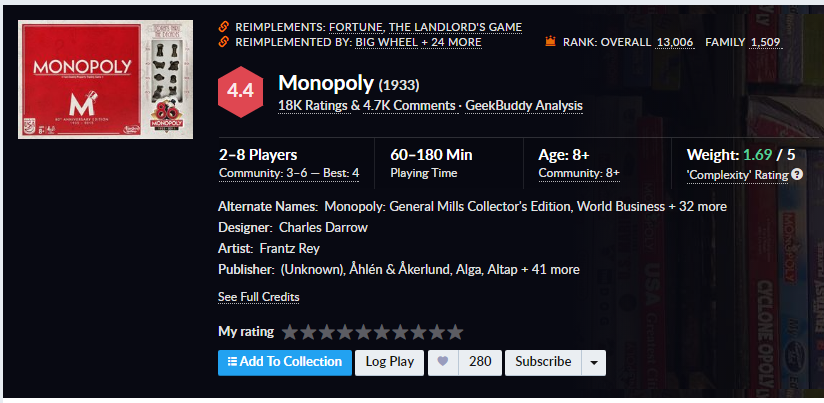
Monopoly has been around since 1933 and it’s been grandfathered into every store and every closet. Most people I know have at least two copies of some kind of novelty Monopoly that they don’t remember receiving. When you tell someone that you’re into board games, they often ask, “oh, you mean like Monopoly” before you instinctively cringe. Currently rocking a sold 4.4 on BoardGameGeek, Monopoly is the kind of game that board gamers love to hate.

I can't make this stuff up, folks.
I can’t make this stuff up, folks.

Looking for more resources to help you on your board game design journey?
Here you go: no email required!

Like this writing style?
Check out my latest blog on marketing here.

At first glance, I scoff at the notion of picking on such an old game. After all, “the best game is the one that gets played” – at least to some extent. Games tend to hit their stride after everyone has played a few games and begun to develop strategies. Monopoly defies this tendency.

Every board game breakdown I’ve done so far: Patchwork, Pandemic, Twilight Struggle, and Carcassonne has been a labor of love. By emphasizing the effects of well-implemented mechanics in thoughtfully crafted games, I’ve helped game designers learn how to create games by using examples of success. It’s time to look at failure for a change. What better game to use as an example than one we’ve all played?

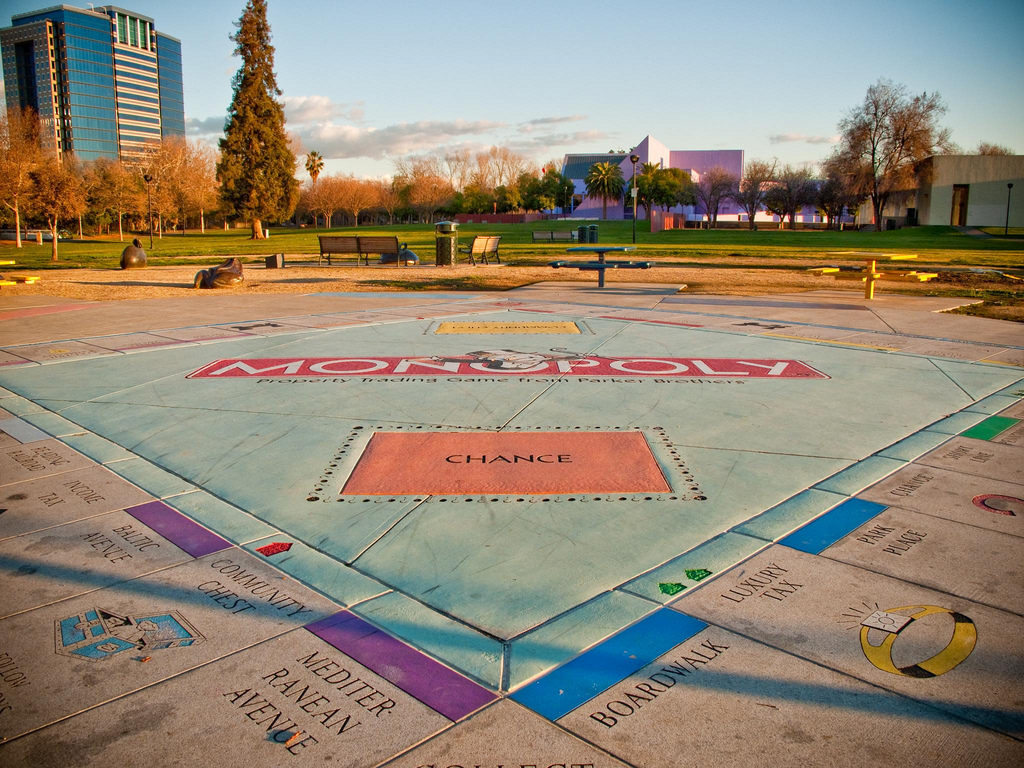
monopoly-park

Monopoly Has Issues with Runaway Leaders

Assets beget assets in Monopoly. People who are lucky enough to land on good property in the early stages of the game can snatch it up in a minute and lock others out of the market. It’s almost as if the game was invented to teach people about the potential evils of capitalism.

Potentially dangerous economic and political commentary aside, games with runaway leaders suck. Nothing takes people out of a game like the realization that they cannot win. Monopoly does not only reward asset holders proportinate to their holdings, but it rewards them exponentially, letting them get further and further ahead. Meanwhile, losers have four or five hundred dollars in their name and pray not to land on Boardwalk.

"I knew I should have gotten Free Parking!"
“I knew I should have gotten Free Parking!”

Monopoly Does Not Make Judicious Use of Luck

To some extent, Monopoly could make up for its exponential runaway leader issue through Chance and Community Chest cards. However, they’re about as likely to be good for a player as they are to be bad. Very few cards adjust for the current position of the player. There is no leveling impulse to the game. Chance and Community Chest cards can even cause a person to lose the game entirely.

Making a choice on which properties you can buy comes down to landing on them by means of random dice roll. Trading is a crapshoot with players who aren’t willing to come off their properties. Not only do players with early assets dominate the game, but asset acquisition feels entirely arbitrary.

Monopoly Has Pacing Issues

Despite letting leaders run away and providing inadequate catch-up mechanics, Monopoly is not a fast game. In fact, it tends to drag on for an hour or more before the obvious leader finally claims victory. You can drag a game on by being the losing player who keeps landing – by random dice roll – on properties not owned by your opponent. This is not at all hard to do, especially considering that you keep getting $200 just for rolling the dice five or six times!

Auggggghhhhhhhhhhhhh!

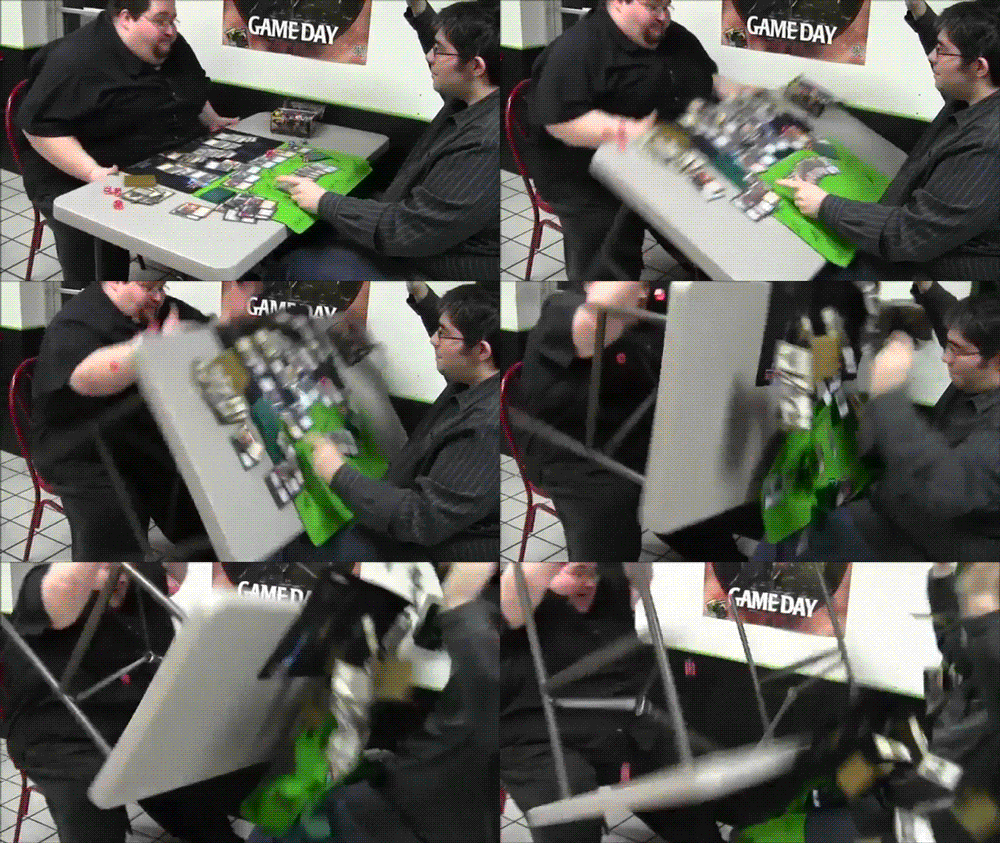
table-flip

Okay, I’m done flipping the table on this game. For all its problems, Monopoly has done a lot of good. Many of us got into board gaming because of it and many of us have nostalgic memories of it. Let’s just agree to never make anything like it again 😛