Town of Salem: Making a Complex Social Deduction Game with Simple Rules

Posted on 1 CommentPosted in Game Breakdown

Ladies and gentlemen, I am breaking from my staid tradition of covering board games alone for game breakdowns. As game developers, we owe it to ourselves not to play simply board games, but video games, social games, mobile apps, and more. For today’s game breakdown, I’m covering the online version of Town of Salem, not the card game.

Looking for more resources to help you on your board game design journey?
Here you go: no email required!

Like this writing style?
Check out my latest blog on marketing here.

A little bit of background: in the late years of my undergraduate studies in the autumn of 2013, Town of Salem got really big in my friend group. We played it a lot for a month or two. There was a time in my life where I was playing three or four hours of it a day.
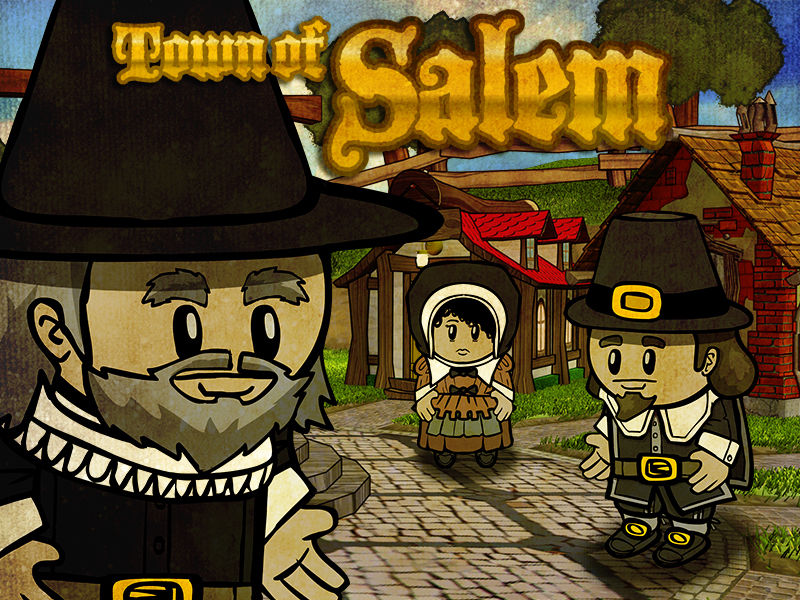
It’s like the old card game Mafia, except with greater variety, online interaction, and whole, whole lot of metagaming. It wasn’t perfect. The online community was dodgy at best – a lot of young kids, a lot of trolls, and a lot of people just plain dropping out mid-game. But it was fun – plain, simple, really good fun.

For the sake of simplicity, I’m going to describe the rules of only a Classic mode game as they were when the game first came out. It’s changed a little since I was really into it and there’s lots of variations on the regular game.

It’s a 15 person game. It’s a game of social deduction, persuasion, and manipulation. Everybody is broadly split into three teams: Mafia, town, and neutral. For the Mafia to win, they must kill all the townsfolk. For the town to win, they must kill the Mafia and the serial killer. For neutral players to win, they have to accomplish their own objectives. Right off the bat, you notice that you can have multiple winners, one winner, or no winners.

To explain what I mean further, here’s a list of roles which people are assigned in Town of Salem:

  • Sheriff (Town): Checks one person every night for suspicious activity – can be fooled by Framer.
  • Doctor (Town): Visits one person every night, saving their life if someone tries to kill them.
  • Investigator (Town): Checks one person every night for an ambiguous clue about their role.
  • Jailor (Town): Jails one person every night, stopping them from doing anything. May choose to execute the incarcerated – but if they guess wrong, they lose that power.
  • Medium (Town): Can communicate with the dead via chat.
  • Lookout (Town): Watches one person every night to see who visits them.
  • Veteran (Town): If this player goes “on alert”, he or she kills anyone who visits them.
  • Vigilante (Town): If this player thinks they know who the Mafia is, they can choose to shoot them. If they guess wrong, they kill themselves out of guilt.
  • Escort (Town): This player “distracts” one person every night, blocking their role.
  • Godfather (Mafia): This person chooses one person to kill every night.
  • Framer (Mafia): This person can frame someone else for a crime, fooling the Sheriff.
  • Mafioso (Mafia): This person carries out the Godfather’s orders and becomes the Godfather if the Godfather dies.
  • Executioner (Neutral): This person’s sole task is to get the town to hang their designated victim using whatever means necessary.
  • Jester (Neutral): This person’s sole task is to get the town to hang them!
  • Serial Killer (Neutral): This person kills one person every night.

Every night, when the sun goes down, everybody goes back to their houses. The Mafia conspires to kill someone, the serial killer does what their namesake suggests, and the town goes around trying to stop the damage and gather information. Every day, all players start discussing what happened, taking note of who died, and start trying to figure out everyone’s roles. The town then chooses a person they would like to hang and then they vote on whether to go through with it. The Town wants to see the Mafia and serial killer hanged and the Mafia wants to see the townsfolk hanged.

Gruesome, I know. Also a bit of a mouthful to try to explain, but trust me when I say it’s fairly straightforward. You learn what every role does in a few games. It takes about an hour to function well in Town of Salem, which is about on track with medium-weight board games.

Then it gets heavy.

From these simple rules, great complexity arises.

Consider this, my friends: under the veil of anonymity, with no way to convince people of who you are, how do you – as the Sheriff – convince the town of who’s Mafia? Further, if you do convince the town and the person you saw hanged was actually framed by the Framer, how do you avoid having the town hang you next round, thinking you’re the Mafia or Executioner? Further still, if you’re found to be right, what’s to stop the Mafia from killing you? You are, after all, dependent upon the tender mercies of the Doctor or the lucky guess of the Escort to save your life.

That’s just the Sheriff. From one role comes a dozen questions of how to proceed and how to persuade. Information is scarce, trust is low, and the risk of getting killed for sticking your neck out is high.

Suppose you’re the Jester. How do you convince the town to kill you? Should you act like a not-so-bright version of the Serial Killer or Mafia? Should you type in chat like a child? Should you act really annoying? Should you just wait for a better time? Should you pretend to mistype the whisper command so that your “private message” to someone else that “I’m glad we targeted SoAndSo last night” is seen by the whole town?

Literally every role comes with a complex set of tactics and behaviors that must be mastered. In addition, you have to be able to read the room you’re playing in. Your approach will be different in a room full of children than it will be with adults, as it will be different in a room full of newbies than it will with veteran players.

Town of Salem is a tight, thoughtful game that trusts its players to make it interesting.


What is the role of accessibility in the board game community?

Posted on 3 CommentsPosted in Philosophy

It seems like every other day there’s a new thread topping Reddit or BoardGameGeek talking about the intricacies of accessibility in the board game community. This is also, bar none, the most controversial subject in gaming right now. In fact, this very controversy has discouraged me from covering this already.

So let’s talk.

Has the controversy started yet?

Looking for more resources to help you on your board game design journey?
Here you go: no email required!

Like this writing style?
Check out my latest blog on marketing here.

It’s a simple concept with profound implications. Accessibility affects the size of the font on your cards, the texture of your tokens, the ways you track information in complex games, and how comfortable women feel at your gaming table. For this reason, I’m splitting my definition of accessibility into three categories: physical, mental, and social.

Before I explain what I mean by each of these three categories, I’d like to point out that the nexus for the vast majority of controversy in accessibility of board games is social accessibility. It’s the behemoth concept with which so many people tango on a day-to-day basis on forums and social media. That’s just one small part of overall accessibility, though, and a focus on that alone would be myopic. I reiterate: accessibility is about making games appeal to more people.

Physical Accessibility

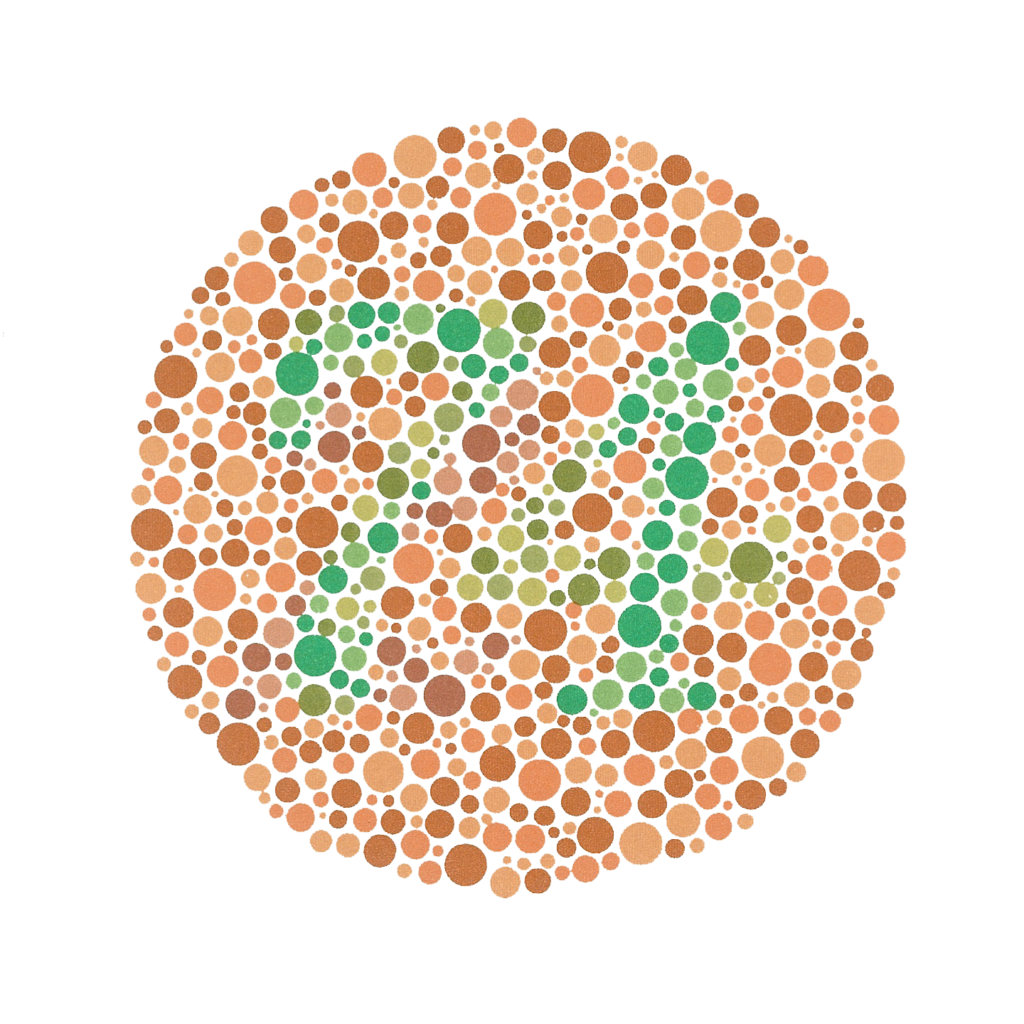
A lot of really great games have physical barriers that exclude potential players. Small font is hard to read if your vision is poor. Small pieces are hard to pick up if your hands are shaky (or if you’re just plain clumsy, like me). It’s hard for a lot of people to tell green and red apart. It sucks for physical barriers to prevent people from enjoying games, so we should do what we can to help.

Colorblindness test or worst Dippin’ Dots combo?

Developers, physical accessibility is often a matter of trade-offs: do what you can do and still meet cost and logistics concerns. Here’s some relatively easy, high-value rules of thumb you can follow:

  • Make font as big as you can. I suggest 12-16 pt, but be realistic about what you can achieve. War Co., my own game, uses 9 pt. font in a genre where 6-7 is fairly standard.
  • Watch out for color-blindness. If you want to color-code components, add a differentiating symbol or some text as a back-up identifier.
  • Make pieces as big as you can. Don’t go below .5 x .5 inch (1.25 x 1.25 cm).

Mental Accessibility

There’s a lot of things that can make it harder to perform the mental functions needed to play games: memory issues, a questionable grasp on English, fatigue, stress, and so on. When we develop games, we need to be mindful about how information is tracked and maintained during the course of the game. “Make sure that you have elegant ways to keep track of different game events, especially if these ways are physical.” Don’t make playing a game harder than it has to be. That unintentionally excludes some people and simply frustrates every one else.

Too tired, forgot rules.

Social Accessibility

This is the form of accessibility where -isms and -phobias come into play: sexism, racism, homophobia, and transphobia. Hell, social accessibility is such a complex issue that it’d take years to disentangle the various ways in which people are scared off of gaming. I generally keep my opinion to myself on social issues, but there’s some things that need to be said. Like it or not, there’s some game groups that scare off everyone who isn’t a very specific kind of person. Read between the lines.

As developers, a concern for social accessibility can show up in a few ways. Games need to be designed with the understanding that they may be played in many cultures where social norms are different. Women are not arbitrary sexualized (borderline NSFW example). For that matter, women are actually depicted every once in a while. When it’s appropriate, depict people who aren’t white or even straight. Accessibility isn’t about shoehorning people into a game where they don’t belong, but it is about showing the world for what it is, in all its complexity. Remember that people like seeing people in games that remind them of themselves.

Tongue-in-cheek observation of the representation of women and sheep on board game boxes. A silly metric that captures an actual problem.

The second part of social accessibility is trickier: we need to make our game groups more inclusive. Honestly, I don’t have a magical answer to how we do this at a big level. But I know how it starts: you and me treating everyone we meet with basic respect and dignity. Accessibility is about making games for as many people as possible AND making game environments for as many people as possible, too.

Our hobby is getting big, folks. A lot of people are getting into board gaming, so we want to have games and game communities ready for newbies. If you’re interested in learning more, check out Meeple Like Us. It’s a fantastic blog that covers accessibility issues in an academic amount of depth.


4 Rude Awakenings I Had While Developing My First Game and How I Overcame Them

Posted on Leave a commentPosted in Know-How

Creating my first game, War Co., is one of the most satisfying things I’ve ever done in my life. It also happens to be, not coincidentally, the hardest project I’ve ever worked on. I’ve had so many rude awakenings and heartbreaks over the course of the nearly two years I’ve been working on it. Below, I share four rude awakenings I’ve had during the development of War Co. and how I’ve overcome them.

Looking for more resources to help you on your board game design journey?
Here you go: no email required!

Like this writing style?
Check out my latest blog on marketing here.

1. There are far more game developers out there than I thought.

Developers are nearly as ubiquitous as playing cards. That's a weird thought, isn't it?
Developers are nearly as ubiquitous as playing cards. That’s a weird thought, isn’t it?

When I first started working on War Co., I didn’t realize the sheer size of the board game community. I had a foggy idea that there were lots of people creating games, but I didn’t intellectually or emotionally understand that thousands, perhaps millions, of people were trying to do what I was trying to do. On Twitter, between the War Co. and Brandon the Game Dev accounts, I follow over 500 board game developers. That’s just the ones I’ve got sorted into Twitter lists, too, the real number is probably well over a thousand.

It was hard for me to accept that there were thousands of people trying to do what I was trying to do. It’s harder still to accept that the vast majority of them will fail. I slowly came to realize that this was my pride and fear talking.

Game development is coolSeems like everyone wants to get into it. The vast majority of people who call themselves developers aren’t serious.  The ones who aren’t serious fade away in less than a year, usually, but their sentiments remain online like ghosts. Just by sticking around, I realized I was doing better than most game developers. The same principle can apply to you…if you stick around.

Then I realized something more profound – we can all lean on each other, sharing ideas, commiserating, opening up our hearts to one another. Your fellow game developers will very often be your biggest fans, wisest mentors, and best friends. I became a member of the game developer community.

2. Kickstarter isn’t as indie as I thought it was.

I’ve written at length about my ideal version of Kickstarter. It’s no secret that much of my game development knowledge was formed in my attempt to process the raw emotions that came with my first Kickstarter campaign’s failure. To make a long story short, you must have a very polished game and campaign to succeed on Kickstarter if you’re a first-time game developer. I had a magical viewpoint of Kickstarter, and that was pretty brutally taken apart in one very hard week.

You can do better than my first try.

Thankfully, I didn’t make the mistake of assuming Kickstarter would provide the crowd. I had a social media presence for months beforehand. What I didn’t have, however, was any idea how social media traffic would translate to Kickstarter, a game more than halfway complete, reviews, testimonials, contacts within the board game community, or accurate cost estimates…

Shit. This is hard for me to admit to you right here. Don’t make the same mistakes as me. 

I wanted to improve, so I got deeply involved in the board game community, continued my social media marketing, finished the game, got about ten reviews, and fire-proof cost estimates. I relaunched at a higher goal of $10,000 and earned $12,510.

3. Many of my biggest potential fans were burnt out.

1-1243352216h4ux

I found that a lot of the people who loved board games the most were also the hardest on them. I call them early adopters – they’re the folks who will take a risk on a mediocre Kickstarter because they love ideas and want to be the first to try the newest, coolest thing. They’re super-fans and they love, love, love board games.

These very same people who will back you when no one else cares are the harshest critics. They play a lot of games, and they are – whether consciously or not – sizing you up to the greatest games of all time. No pressure. They’ve also been burned by a lot of bad Kickstarters, been hassled to try a lot of garbage PNPs, and generally seen a lot of lousy hijinks in their time.

I learned to listen to them. I learned to observe Twitter trends, read Reddit threads, and scour BGG ratings. If you stay involved, you will understand the pet peeves of your niche audience. You will understand their loves and hates, their pains and pleasures. It takes time. Thankfully, many people who love games the most aren’t shy about telling you what you can do better. If you can handle harsh criticism, it can make your game – and indeed, you yourself – stronger.

4. It takes longer than I thought to design a game.

This bears little explanation, but it’s quite possibly the biggest bear of them all. I thought it would take about six months to make War Co. That was naive. The truth was that it took a lot longer than that – almost every game does. Only thing I knew to do was keep sticking with it. Keep showing up. Keep looking for ways to improve.


I’ve had a long journey. It’s been a road of many twists and turns for me. I leave you with these parting words of advice:

  1. Stick with it.
  2. Start a Twitter account. Follow at least 100 game developers – both successful ones like Gil Hova and Jamey Stegmaier, and struggling ones as well. Organize them into a Twitter list. Keep tabs on their projects.
  3. If you want to Kickstart your game, get it 90-95% finished before you campaign. Build a big social media audience with a lot of one-on-one interaction. Ask your followers, privately and directly, for their feedback. Listen to them. Continue this process for a month or two.
  4. Figure out who your game is for. Find the places they hang out. I suggest using Twitter and creating Twitter lists of people who like your style of game. Watch them gush. Watch them complain. Take notes, adjust your game and your business around their needs.
  5. Seriously, stick with it.