How do you know when a board game is complete?

Posted on Leave a commentPosted in Philosophy

Board games are complex projects. Every board game is unique. It’s not a commodity like ballpoint pens, Corn Flakes, or toilet paper. You can’t use purely quantitative metrics to check whether it’s good or not. You can’t even directly compare your board game to other board games. To know whether your board game is complete, you have to use qualitative metrics. You have to play it with a lot of people and measure its quality by their opinions. Board game quality testing is very subjective.

Looking for more resources to help you on your board game design journey?
Here you go: no email required!

Like this writing style?
Check out my latest blog on marketing here.

The fact that you have to rely on qualitative metrics doesn’t mean you can’t take a scientific approach to perfecting your game. You have to be very careful when gathering others’ opinions. You have to ask the right questions and observe their relevant reactions. It helps to make a list of what you’re looking for. However, creating that list requires philosophy and introspection.

Sometimes when thinking about difficult problems, I do a question/answer session inside my own head. It’s the best way I know of tackling complex, vague questions like “how do you know when a board game is complete?” If you’ll indulge me for a moment, I’ll show you what that’s like.


Q: How do you know when your game is complete?

A: When it gives people what they’re looking for in a board game.

Q: Gee thanks, professor. That’s a little bit vague. What are people looking for when they play a board game?

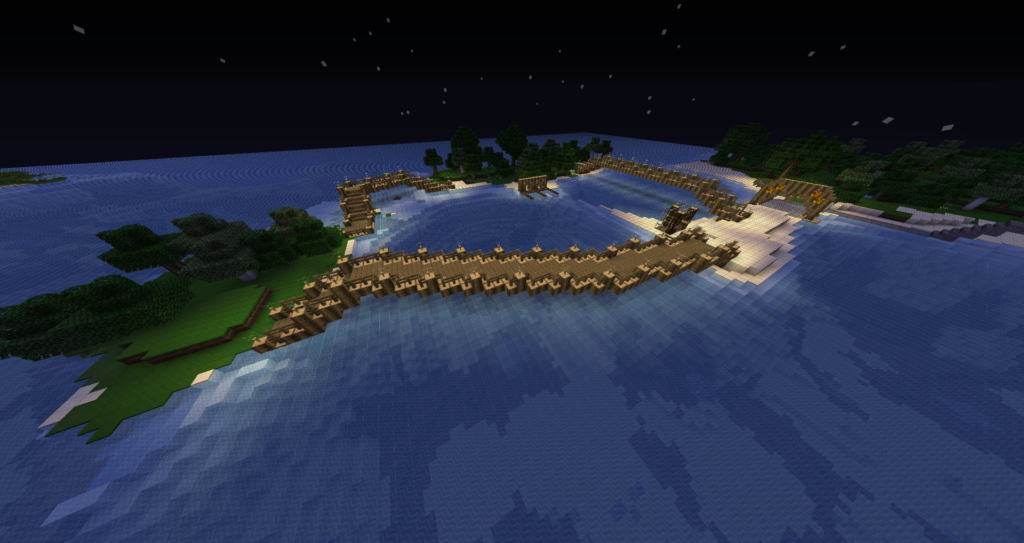
A: Remember that scholarly research about this question in the Minecraft post? “[P]erceived in-game autonomy and competence are associated with game enjoyment, preferences, and changes in well-being pre- to post-play. Competence and autonomy perceptions are also related to the intuitive nature of game controls, and the sense of presence or immersion in participants’ game play experiences.”
Q: How does that apply to board games?

A: First, strip out all obstacles to immersion. Make sure you have a clear objective and rules. Make sure you have a basic sense of balance and no runaway leaders. Make sure players have some intuitive sense of the strategy they need to use to play.

Q: But wouldn’t that make a very mediocre, bland game?

A: It would, but failure to accomplish these basics would prevent you from getting any further. It’s like Maslow’s hierarchy of needs. You don’t care about your self-esteem when you’re starving!
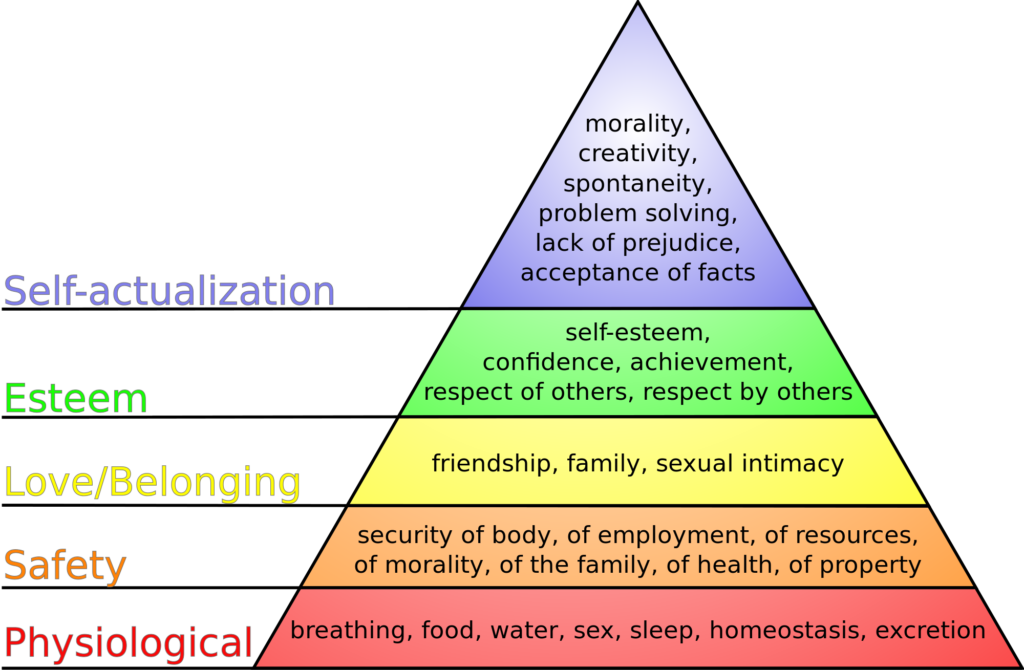
Maslow’s Hierarchy of Needs. Photo from J. Finkelstein, who posted it to Wikipedia under the CC BY SA 3.0 License (Source).

Q: So after you accomplish the basics, what would come next?

A: Make sure your game has inertia for winners, but a catch-up feature for losers. Make sure different strategies work. Make sure it’s not always predictable…you want an element of surprise. Make sure your game has a different flavor than anything else out there. Make sure it’s got “hooks” that you can easily describe to others to get them interested. Oh…and make sure people find it fun!

Q: Is that everything?

A: Nope! We’re only talking about the gameplay itself. You need to test the art and every component. You need to proofread the game about 10-15 times.

Q: When you say testing, what does that entail?

A: Blind play testing. Lots and lots of blind play testing. Get everything you can right on your own, then get others to help you out. You can’t see all your problems.


As you can see, there’s a lot that goes into calling a board game complete. This is not even considering the business side of the equation.

The important takeaway is this: you must ask yourself hard questions about your game and improve it until you are satisfied. No one can give you answer to this question, but I have given you a method to approach the question.


Bonus content: a list of all the completion criteria in this article

  • Remove obstacles to immersion
    • Clear objective
    • Clear rules
    • Basic balance
    • No runaway leaders
    • Basic sense of what to do
  • Good game characteristics
    • Inertia for winners
    • Catch-up feature for losers
    • Multiple viable strategies
    • Element of surprise
    • Different flavor from all other games
    • “Hooks” used to describe the game
  • Testing
    • Art
    • Components
    • Proofreading


3 More Rude Awakenings I Had Starting a Board Game Business

Posted on Leave a commentPosted in Know-How

I’ve written before about some of the rude awakenings I experienced when starting a board game business. So many of our sorrows are born of the disparities between our expectations and reality. It’s my hope that by spelling out the specific things that happened to me, I can prevent you from being surprised and disappointed by some of the harsh realities of game development. Through that, I hope you’ll be free to experience the incredible satisfaction of creativity and the sheer fun of getting into the gaming industry.

Looking for more resources to help you on your board game design journey?
Here you go: no email required!

Like this writing style?
Check out my latest blog on marketing here.

And now, without further adieu…

1. Taxes are everywhere.

Other than death, taxes are the one certainty in life…but the extent of taxes I encountered during the creation of War Co., the Kickstarter campaign, manufacturing, and fulfillment were nothing less than stunning. I can’t imagine it being any different outside of the United States. For everyone who buys cards from inside my own state of Tennessee, I owe sales tax. For anything I import into the state of Tennessee, I owe use tax. For any profit I earn, I have to pay business tax. If I pocket any of that profit, I have to pay income tax on that.

Oh, and that’s just domestic taxes. Whenever cards are shipped from the United States to other countries, they’re subject to value-added tax, customs tax, and administrative fees on top of customs taxes. I cover all this on my end so customers don’t have to deal with the hassle.

You get used to it after a while, and it’s not enough to choke the life out of a small business like many hand-wringing individuals may fear. In fact, some level of taxes is a fair trade for the services which facilitate owning a business. The trouble is that they’re hard to calculate and the actual amount you end up paying is a surprise early on until you build robust ways of predicting it.

I’ve learned how to cope with taxes through experience and careful bookkeeping. Staying organized has helped me stay on top of this.

2. Shipping is a complex beast.

I’ve dedicated not one, but two articles to the complexities of shipping. I think I said it best in a prior article when I said:

For a moment, consider all the variables that go into fulfilling a Kickstarter campaign. Your manufacturer has to receive parts from their suppliers. They have to send the product to you or your distributors in bulk. Then they have to separate the rewards and send them to individuals. The whole time, your rewards or their component parts are zipping back and forth in boats, cars, planes, and trains. They cross country lines multiple times, go across oceans, fly thousands of miles, and are handled by multiple different companies. Your rewards are subject to all kinds of laws and taxes that you can’t possibly understand all at once. No one can.

That realization sink in yet? Good. Don’t let it dishearten you, because it’s not actually that hard to deal with. You just need to respect the complexity and variability of what you’re doing. That’s the beginning of understanding.

The two articles linked above show you how I’ve overcome the challenges of fulfillment. It’s worked pretty well for me, and I’m actually a couple hundred dollars under-budget!

3. Most of my time is not spent designing.

I love game development. I also love running a business. Yet shockingly, the amount of time I spent developing War Co. was far less than the amount of time I’ve spent running social media campaigns, preparing for Kickstarter, getting the game manufacture-ready, fulfilling the game, and performing general day-to-day business functions.

For every hour I spent on War Co., maybe fifteen minutes went to developing and play-testing the game. The idea of the creative genius sitting alone in his or her room, creating perfection is a myth. Creating something great comes through a good idea filtered through rework and the opinions of hundreds of other people. That “something great” is then propped up on an infrastructure of business processes like accounting, promotion, fulfillment, and sales.

Time spent on design is crucial, but you can’t ignore the entrepreneur and manager aspects.


This is an industry of immense possibility and potential. It’s a blast, and I encourage you to get involved and make your dreams come true, too. But there’s no sense in being delusional about what it’s going to take. There’s a lot of hard work and relearning along the way.


It’s Your Turn

Posted on Leave a commentPosted in Motivation

The world belongs to those who take responsibility. Don’t be afraid to work on a pioneering, strange new project where the expected outcome is unknown. Life is about experimentation and trying new things.

Looking for more resources to help you on your board game design journey?
Here you go: no email required!

Like this writing style?
Check out my latest blog on marketing here.

Every once in a while, an opportunity will come to you. That’s great! You should make the most of it, because these opportunities are golden. Yet most of the time, especially early on in your creative career, opportunities won’t come to you. They’ll go to others whose names are already out there. Don’t succumb to helplessness, that sickly sweet swan song of comfortable impotence. You can make your own opportunities. You can boldly create, show yourself growing and changing in the public eye, and slowly make a name for yourself.

Life doesn’t follow a linear path. You don’t have to wait on the dice. You can move any direction you want whenever you please.

Nobody’s told you this, but it’s your turn. In fact, it’s always your turn. It’s never not been your turn. I like to make comparisons between life and games, but they’re often flawed comparisons. Games often have clearly delineated turns. Your move or their move – seldom is it both at the same time. Life isn’t that way. Your move is whenever you damn well decide to move. Your turn is any time you take responsibility. Every time you try something weird.

You don’t have to roll for initiative in life. You can just take it.