4 Lessons from Dinosaur Island for Aspiring Board Game Designers

Posted on Leave a commentPosted in Behind the Scenes

A couple of years ago, Dinosaur Island was a massively successful game. It raised over $2 million on Kickstarter and stayed in the BoardGameGeek hotness for a really long time. Even now, two years later, the game’s name has enough cultural cachet to lead to the most popular board game giveaway Pangea has ever sponsored.

Looking for more resources to help you on your board game design journey?
Here you go: no email required!

Like this writing style?
Check out my latest blog on marketing here.

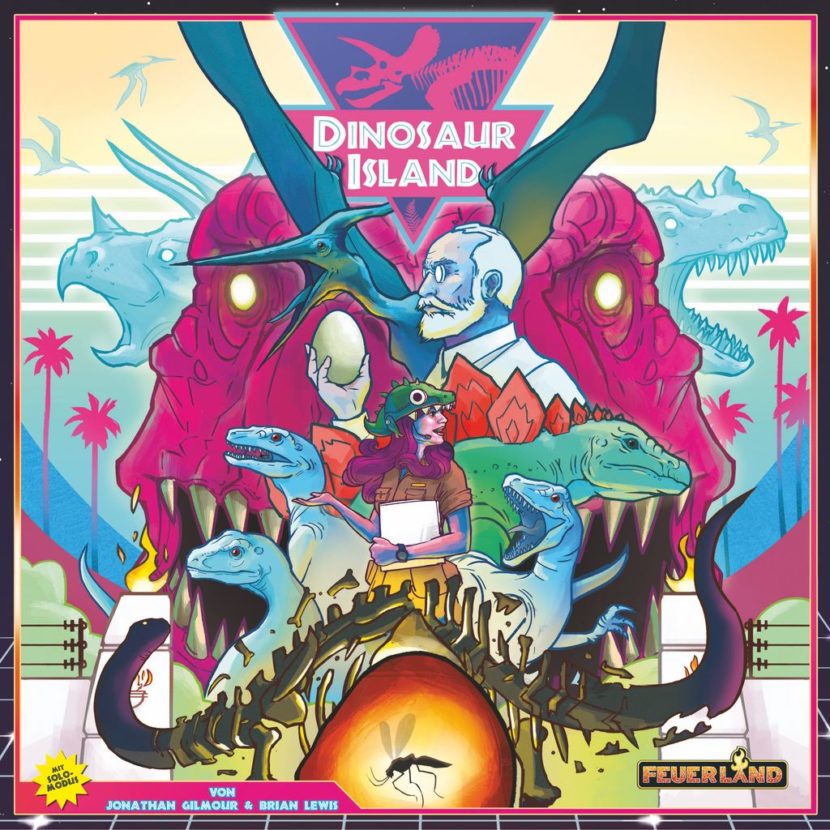
For the purposes of this post, I’m going to talk mostly about Dinosaur Island’s superficial qualities. That entails theme, components, and art. While the gameplay is certainly good in its own right, I believe it’s the aesthetic of the game that led to its popularity and, as such, the lessons in this post are dedicated to analyzing that aesthetic.

With that in mind, here’s a quick overview of the game from Board Game Geek:

In Dinosaur Island, players will have to collect DNA, research the DNA sequences of extinct dinosaur species, and then combine the ancient DNA in the correct sequence to bring these prehistoric creatures back to life. Dino cooking! All players will compete to build the most thrilling park each season, and then work to attract (and keep alive!) the most visitors each season that the park opens.

1. Dinosaur Island nails nostalgia.

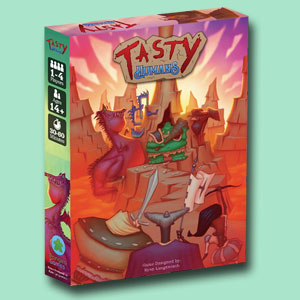
Take one good look at this game. You know full well which era is being depicted and which movie is being imitated. It’s no secret that Millenials – which represent a glut of the board game market – love 90s nostalgia (which is, indeed, their own childhood).

Let’s be clear. Nostalgia works. It’s an effective lever for making money. Dinosaur Island is extremely effective at monetizing nostalgia.

2. With a distinctive art style, you will stand out on social media.

At a casual glance, Dinosaur Island might seem like a throwback. After all, it harkens back heavily to the very 1990s film Jurassic Park and the Michael Crichton novel that preceded it. The resemblance even toes the line of plagiarism (though I personally see the game as more of a loving tribute).

Sure, the neon and pastel colors make you think the game was made somewhere between the end of the Reagan administration and the pilot episode of Friends. But it’s really not a throwback. In fact, Dinosaur Island has a distinctly modern art style calculated for the social media age.

So let’s say you’re a modern-day board gamer. You’re scrolling through your board game heavy feed. You see pictures of gritty, realistic sci-fi worlds and detailed fantasy universes. There are grim, dark games and simple, abstract games. Nothing quite looks like Dinosaur Island, though, so you stop scrolling listlessly and double-tap like. Others like you do the same and the buzz builds. This same principle applies to retweets, Facebook ad efficiency, your ability to spot the game across the room at a convention, and so on.

It pays to look different.

3. Respect the power of the custom meeple.

It seems I can seldom emphasize enough the importance of the tactile experience of board games. After all, our world is rich with entertainment options the likes of which our distant ancestors could have only dreamed. There are only two things that meaningfully separate a board game from its video game counterpart. The first is socialization in real life with other people, and the second is the physical experience of components. Only one of those comes in the box.
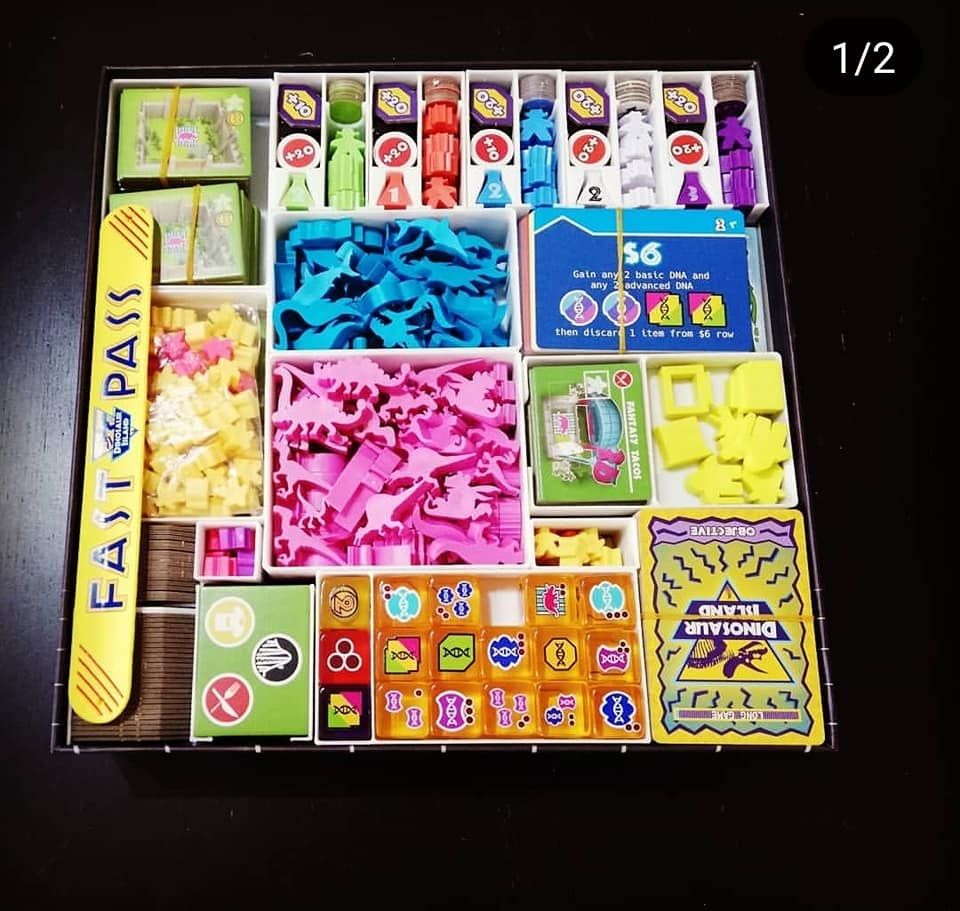
With this in mind, a keen observer of the board game industry will notice there are a bunch of ways you can create unique physical experiences. You can use creative three-dimensional gameplay like Colt Express or props like Ca$h ‘n Guns.

Custom meeples, too, are a popular way of creating a wonderful physical experience. In many ways, they are actually superior. They are often the most cost-effective components when it comes to crafting unique experiences, often costing as little as $0.03 or $0.04 per piece in bulk when carved out of wood.

Gamers love custom meeples, they’re cheap, and they photograph well. Hard to beat that!

4. No matter how pretty the theme, don’t skimp on the game.

I’ve spent the entirety of this post so far praising the superficial qualities of Dinosaur Island. It’s true – the success of Dinosaur Island can be largely chalked up to the way it looks. That means art style, components, and theme as a whole.

But don’t succumb to the cynical conclusion that you can polish garbage and sell it for $2 million on Kickstarter. That’s just not true. As seemingly illogical as consumer behavior can be, gamers are at least sophisticated enough not to buy a truly bad game. To believe otherwise is to reduce gamers to mindless consumer drones, which is simply not the case.

A quick scroll through comments on Board Game Geek reveals statements such as the following:

  • “To my great surprise, this quickly became one of my wife’s favorite games… The theme makes it easier to teach, and once you’ve played a few times, the level of depth increases and you’ll really burn your brain at least a couple turns (but not too much).” – FranklinT
  • “This is a very good eurogame which is easier [to learn] than it appears at first sight.” – Glasgow17
  • “Jurassic Park the game is fun, light-hearted but heavy enough on strategy and a solid experience.” – Dudewiththeface

I interpret comments like the above as being indicators that the game meets at least a certain minimum expectation of quality. You see a lot of comments coming from people who find themselves in the unique position of being surprised by the quality of the game.

Not convinced? Consider one more factor. The number of board game reviewers with a truly substantial reach is pretty small and they constantly have to deal with a deluge of games. Many, upon reading rule books or playing a game, decline to provide a review when a game isn’t good. That didn’t happen here. If it did, the game wouldn’t have the reach needed to raise $2 million. So in summary, no – beauty cannot substitute for quality.

Final Thoughts

Dinosaur Island is a master class in branding through products. The game is keenly tailored for the audience it targets. Its art, components, and use of late 80s / early 90s nostalgia made the game stand out in a noisy world. From its success, we can all learn how to create games with enticing themes.


4 Lessons from Twilight Imperium for Aspiring Board Game Designers

Posted on 1 CommentPosted in Uncategorized

Twilight Imperium is among the greatest board games of all time according to BoardGameGeek. Within that notoriously hard-to-please community, it holds a staggering 8.7/10 rating.

Looking for more resources to help you on your board game design journey?
Here you go: no email required!

Like this writing style?
Check out my latest blog on marketing here.

It’s also got an absurdly high complexity rating of 4.2/5 and a play time of 4 to 8 HOURS. Oh, and it costs over $100 on Amazon in the US.

Today, we must ask ourselves how this extremely long, extremely complicated, and extremely expensive game captured the attention and undying affection of the hardcore hobbyist board game community. There are a hundred good answers to that question, but today, I’ll give you four based on my own experiences with Twilight Imperium.

But first, let’s talk about what exactly Twilight Imperium is. I’ll borrow the description from its Board Game Geek page since I think it says it best:

Twilight Imperium is a game of galactic conquest in which three to six players take on the role of one of seventeen factions vying for galactic domination through military might, political maneuvering, and economic bargaining. Every faction offers a completely different play experience, from the wormhole-hopping Ghosts of Creuss to the Emirates of Hacan, masters of trade and economics. These seventeen races are offered many paths to victory, but only one may sit upon the throne of Mecatol Rex as the new masters of the galaxy.

No, dear reader, I did not copy and paste a whole passage from Frank Herbert’s Dune just then. Twilight Imperium is that rich and complex in premise alone. I won’t even attempt to get into the grittiness of the rules, because this is going to be 1,000-word article, not 10,000. Nevertheless, there are great lessons we can learn from this game with even a casual analysis.

1. For very long games, you want very high-quality components.

Board gaming is a very tactile experience. Components are a large part of why people choose to play board games in person in the year 2019. Video games are extraordinary these days, as are options for playing board games online.

All that is to say, if you’re going to get people to sit down for 4 to 8 hours to play a single board game, you have to bring great components. And, Twilight Imperium…oh, there are no words…

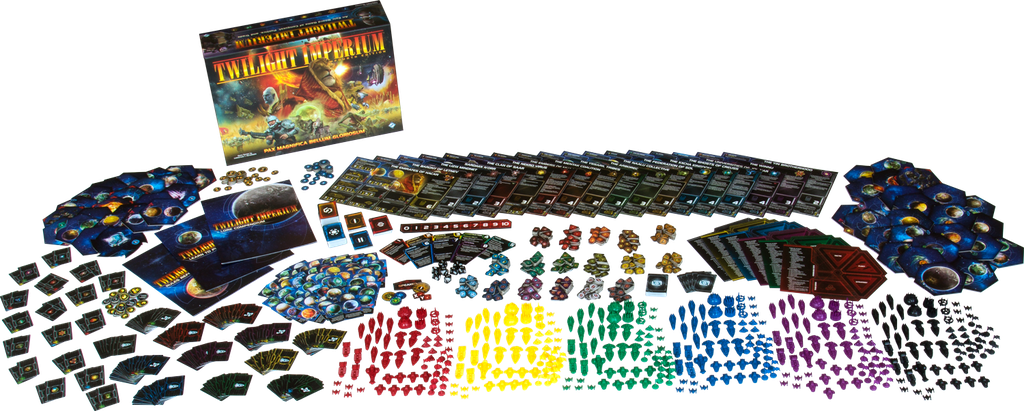
Photo by W Eric Martin, CC BY 3.0.

There are very, very few board games that have this many tactile parts. There is a wide variety of shapes and colors, making the game have a table presence that is nearly unrivaled. Look at the photo above – it looks like something that can be played for eight hours at a time.

If your ambition is to make a heavy, lengthy game, you have to deliver on the physical experience. Twilight Imperium is a perfect example of how to do that.

2. Nothing inspires awe like sheer scope.

If you’re going for light fun, your game needs to be less than an hour. For something more complex, but still approachable, you need to keep it to three hours max.

But what if your ambition is to make a massive game? You can’t just rely on fun or challenge. No, you have to make people feel a sense of awe. That is the only emotion strong enough to keep people sitting up in chairs for 4-8 hours at a time.

Everything in a game must build toward that sense of awe. In Twilight Imperium, think about the experience you have as you get ready to play:

  • You lift the heavy box and take out all the pieces.
  • Good grief, there are a lot of pieces.
  • You painstakingly set the whole thing up.
  • The rulebook is really big.
  • The run-time is long.
  • The story is told on a galactic scale and covers SEVENTEEN different types of characters.

All of this repeats the message “buckle up, this is going to be a wild ride!”

3. Twilight Imperium is an example of how to succeed at complete immersion.

Twilight Imperium doesn’t just promise a wild ride, though. It succeeds. Check out the Board Game Geek reviews. You will see, over and over again, words like “immersive” and “epic.” Time flies by when you’re playing this game.

This largely ties into sheer scope and the awe factor. However, the awe you inspire early in your design has to maintain players’ interest throughout the whole game. The only reliable way to succeed in a task so big is to play-test specifically around immersion. It has to be the benchmark by which your design, should you decide to make something as heavy as this game, is measured.

4. No two games should be the same.

So many of the great games that I find inspiring from a game design perspective share this quality. You can call it replayability or variance. No matter what, whether you’re playing Terraforming MarsTwilight Struggle, or Twilight Imperium, tough-to-learn games must have this quality.

When designing a heavy, complex game, bear in mind your players’ reason for playing in the first place. Why choose the heavy game over several lighter ones? The heavy game bears a great burden – it has to provide opportunities for creative gameplay so that the game stays fresh over its entire runtime. This will also have the effect of making it to where no two games feel the same.

Final Thoughts

Twilight Imperium is a fantastic game. It is the prime example of how to make an ultra-heavyweight game that never alienates its players.

From the very start, players need to be wowed by the game. Its physical presence and sense of scale need to reassure gamers before they ever even take the first turn. These qualities are like promises to gamers that it will be worth their time.

I strongly encourage you to play Twilight Imperium yourself so that you can experience what makes it so immersive. Even if you only have the opportunity to play once, you will be able to appreciate just how many different ways the game can unfold.


How to Make Board Game Rules

Posted on 7 CommentsPosted in Dev Diary

This week while working on my current board game design, a lot of things have come into focus. Now it’s time to start tweaking board game rules. This is where board game design often becomes very tricky.

Looking for more resources to help you on your board game design journey?
Here you go: no email required!

Like this writing style?
Check out my latest blog on marketing here.

With this in mind, let’s talk about how exactly you can make board game rules. As I said last week, “rules regulate the way mechanics are implemented. A mechanic is the concept behind the game and the rule is the way that it’s handled to ensure balance.” Rules are really tricky to do right because you have to serve two purposes: balance the game and communicate clearly.

Rules vs. Rulebooks

Speaking of communicating clearly, let’s draw a distinction between rules and rule books. Rules are conditions within the game that constrain the players from immediately achieving their objectives. Rules can be in rule books, on cards or pieces, or on the board itself.

The rule book is a document meant to teach players how to play. It always includes at least some rules but often doesn’t include all of them. Many of the rules in a game will come from the board, cards, etc. Rule books teach information as well as intention.

Rule books need to be short, or else outside sources will explain the game for you. They need to include examples and specifics, but they shouldn’t go overboard by explaining the finer points of strategy which are better left discovered.

Rule books can be used to prime a player’s experience to make sure the player has the most fun possible. They need to be concise, visual, and skim-able. They need to give players enough information to play the game, even if they only halfway read it.

If your rule book needs a hard cover, it’s probably too long.

Making Balanced & Clear Rules

You can’t have a game without rules. A game without rules is by definition simply free-form play. You can have a game without a rule book – it might just be difficult to play.

With all this said, how does one create rules that fulfill the twin purposes of balancing the game and communicating clearly? I have some guidelines. This is non-exhaustive and it just includes what’s on my mind this week.

Balance Scales
Playtest a Ton

No amount of planning, cleverly designed trade-offs, Excel spreadsheets, or game design theory will ever replace the need to play your game hundreds of times to make sure the rules work. Sometimes stuff you don’t expect work ends up working beautifully, and vice versa.

Consider How Much Challenge You Want Your Game to Have

Rules are the primary way to add constraints (or rather, difficulty) to the game. Think long and hard about how much you want the game to fight back against the players. Make sure your rules are lined up with your intended difficulty. Failure to do this thwarts player expectations, which makes them upset with the game being too easy or too hard.

Consider Where Your Game Falls on the Luck/Skill Spectrum

When it comes to luck vs. skill, there is no ideal way to create a game. There is a sliding scale of luck and skill and you need to choose a place you want your game to fall along that spectrum. Make sure your rules are tonally consistent with your intentions.

Avoid False Choices

If you give a player a choice, make it a tough one. Nothing takes the steam out of game like too many obvious decisions. It makes a player feel powerless, perhaps even like the game is being condescending. When rules force players to make a choice, all choices should come with important pros and cons.

Metro of Tokyo
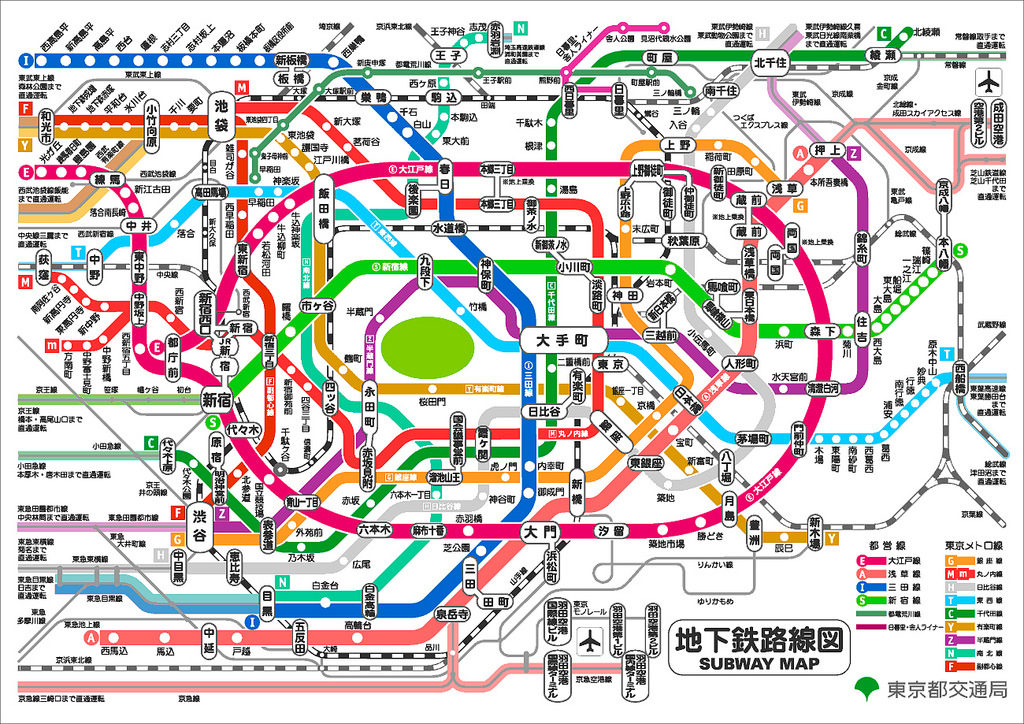
Too much information will rob your game of clarity! (Photo taken by Antonio Tajuelo. Source, License)
Clearly Point Out Relevant Keywords

Relevant keywords should be capitalized at the least. When you introduce them for the first time, it’s a good idea to bold the words as well. When you make reference to the color green or any other color, you should stylize your text to match.

Use Consistent Keywords and Phrasing

Nothing is more confusing than rules which call the same thing by different names. In Highways & Byways, I make reference to tracking pieces called Travel Cubes. I call them Travel Cubes every time I reference them. The words Travel Cubes are always capitalized in the rules – both the rules in the rule book and the rules on the cards.

Use Present Tense, Active Voice, Second Person

Be direct when writing rules. You will directly address the player with succinct imperatives.

If a Rule is Confusing, Drop It

Want to know how to find a troublemaking rule? Look for a rule requires a bunch of tracking or a bunch of caveats. Your game will be played by people who don’t know the rules inside and out. It might be played in a loud environment. The more you force your player to remember bizarre little rules, the more you risk being misunderstood.

14 Rules for Board Game Rules

Let’s conclude this article by giving you some rules for making rules.

  1. Rules are how we implement game mechanics.
  2. The reason we have rules is twofold: balance the game and explain how to play.
  3. Rules are conditions which prevent players from immediately achieving their objectives.
  4. The rule book does not just contain rules. It teaches players how to play the game.
  5. Rule books need to be concise, visual, and skim-able. 
  6. Rule books need to give players enough information to play a game, even if only halfway read.
  7. Good rules match the intended level of challenge for gamers.
  8. Good rules match the intended luck/skill balance of your game.
  9. Avoid false choices!
  10. Always point out relevant keywords.
  11. Use keywords consistently.
  12. Use present tense, active voice, and second person when writing rules.
  13. If a rule is confusing, drop it.
  14. Play-testing above all else!